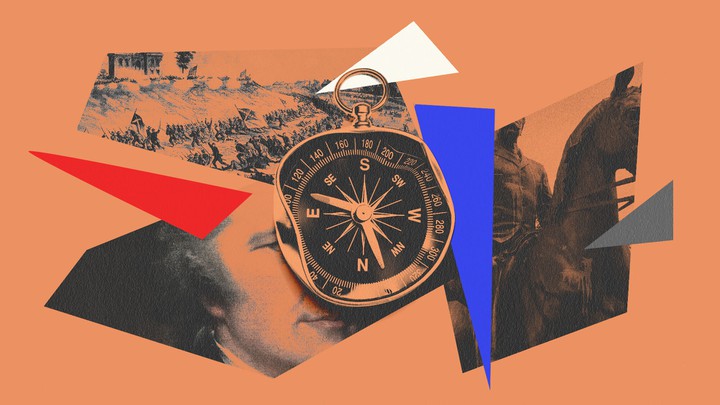
If you click here you will get to a BBC article where US historians debate Donald Trump’s legacy. This is a useful article for us. By contrasting different historians back-to-back it makes the point very clearly that you conclusions often depend on your starting point. It is also noteworthy what they emphasise and what they downplay.
Have a read, and we can discuss this. Above all- which do you agree with more – and why?
If you click here you will get to an excellent new project from Queen Mary University – London. It’s aim is to analyse and visualise communication networks from Tudor times.
“Tudor Networks works in a similar way to platforms such as Google Maps. It offers to possibility for users to view almost 100 years of history from a macro perspective. Just like Google Maps might reveal streets that had never been mapped before, this platform reveals hidden histories and network connections that were previously unknown.
The platform allows users to zoom in and out of correspondence, jump from one point in history to the next, move from a view of thousands letters to the itineraries of a specific person, and to view the networked connections of people through time, and to read various letters related to this.
The data visualisation website of the project maps over 120,000 letters pertaining to the Tudor government, which are part of the State Papers, many of which are held by the National Archives. The collection includes political missives, foreign intelligence reports from diplomats and spies, as well as correspondence intercepted through the practices of espionage.”
It is very clever – have a look.
Mr Kydd
Posted inEnrichment|Comments Off on Enrichment – Queen Mary’s Geoview project – data visualisation sheds new light on Britain’s Tudor past
We are currently pulling together all the lower school entries for who they would put on a statue (and why). We are going to make a display of them in the department. Look out for it – some really are excellent. I thought I would include for you guys three enrichment opportunities that you might like to explore.
A new 20 minute documentary on the Central Club Mural (and the attempts to save it) – below
Obviously this is the end of Remembrance week. It does however mark two significant anniversaries. You may have noted in the news that Wednesday marked the centenary of the laying to rest of the unknown soldier in Westminster Abbey. Less reported is the fact that Saturday marks the eightieth anniversary of the bombing of Coventry. This was amongst the very worst of the Blitz.
Below are two excellent pieces of journalism from the BBC. The first is Dan Snow on the story of the unknown soldier. Below that is a link to the BBC’s 70 stories website. This is a remarkable piece of oral history done in 2010 to record the scale and impact of that bombing by the people who lived through it.
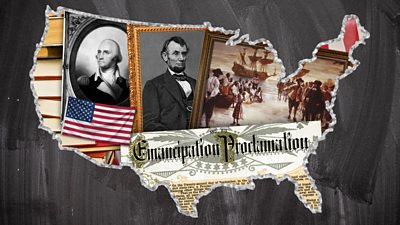
As President Trump pushes for “patriotic education” in American schools, some teachers say students aren’t being taught the whole story when it comes to US history and its roots with slavery.
If you click here you will get to Professor Joanna Freeman’s article on being an (American) historian in the Pandemic. It is from the Washington Post.
In it she argues, “historians don’t just study history. We construct it. We puzzle pieces into meanings. Aided by our instincts and experiences, as well as by our research, we make sense of other times, other nations, other peoples. In that sense, the writing of history is always personal. But it’s one thing to reckon with the past and quite another to make sense of transparently historical events as we live through them. Like so many others, I’m staggered by daily bursts of upset and unknowingness, alternately depressed, anxious, angry, and distracted. There’s a whole-soul exhaustion born of living in the age of Trump. And looking to the past provides no respite. Indeed, when it comes to decoding our current crises, American history holds some hard lessons. As a historian, I know that things don’t always return to “normal” and that recovery is painfully slow and piecemeal. I know that “good” doesn’t always prevail and that past accomplishments can be undone, past injustices reborn. I know that dangers often rise unnoticed and trigger transformative change in a rush. I know the vital importance of the institutional guardrails crumbling around us, and the dangers inherent in unbridled power. And I know—deep in my gut—that I have taken things for granted that I will never take for granted again.”
Have a read, and see what you think.
Mr Kydd
Posted inEnrichment, History Society|Comments Off on Enrichment – something to read / discuss. Being an American historian in 2020
If you click hereyou will to a CBS article on the restoration of 33 dioramas created for the American Negro Exposition of 1940. It was created to celebrate African American achievements since the end of slavery.
There had never been anything like it. President Roosevelt pushed the button that turned the lights on Opening Day. There were all kinds of exhibits, including a Hall of Fame honoring notable African Americans. Jazz legend Duke Ellington entertained the crowd. And at the center of it all was a huge hall featuring 33 dioramas. It was trying to celebrate the enormous contribution of Black Americans to the USA, and change attitudes. It was perhaps an early manifestation of Black Lives Matter.
If you click here you will get t o the BBC’s obituary for John Lewis. Below is the news report from Channel Four. Please have a look at both – they are like a timeline of the Civil Rights unit. As the article suggests, he “forged his legacy as a lifetime champion for civil rights and racial equality during the struggles of the 1960s as he preached a message of non-violence alongside Dr Martin Luther King Jr.”
The two quotations from Lewis below really sum up the passive resistance movement.
“Hold only love, only peace in your heart, knowing that the battle of good to overcome evil is already won.
“Choose confrontation wisely, but when it is your time don’t be afraid to stand up, speak up, and speak out against injustice.”
Posted inIGCSE, Obituaries|Comments Off on Civil Rights obituary – John Lewis