Niall Ferguson – The Pity of War – watch a historian in action

Niall Ferguson presents The Pity of WarAll,

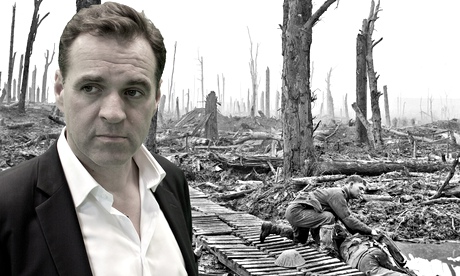
Year Thirteen historians will, in their Russian dictatorships course, soon be considering turning points in history. In particular, you will investigate war – to quote Trotsky – as the locomotive of change. If you click here you can watch Niall Ferguson discuss the British decision to go to war in 1914.  It is a great opportunity to see a current historian in action.

The programme description reads as follows.

Was the Great War a great mistake? In this innovative programme, Harvard historian Professor Niall Ferguson offers a different perspective on the First World War and argues that Britain’s decision to enter the war was a tragic mistake.

The First World War was one of the great turning points of modern history. We know where the war started: in the Bosnian capital of Sarajevo on 28 June 1914, when a Bosnian Serb named Gavrilo Princip murdered the heir to the Austro-Hungarian dual monarchy. But how and why did this crisis in the Balkans escalate into a bloody global conflagration? Did Britain really have to fight a war against Germany?

Niall Ferguson links cutting-edge graphics and short illustrative stories to place the First World War into the context of human history. He then argues that much of the responsibility for the scale of the conflict lies with the British and suggests that Britain’s decision to enter the war in 1914 was not merely tragic for those who lost their lives, it was also a catastrophic error that unleashed an era of totalitarianism and genocide around the world. At the same time, the war revealed a fundamental truth about humankind’s propensity for violence.

At the end of the programme these contentious issues are debated by leading WW1 experts and the studio audience.

If this interests you, then you should visit this BBC page which lists what other programmes are available on TV and radio.

Mr Kydd.

Posted in Enrichment, history in the news | Comments Off on Niall Ferguson – The Pity of War – watch a historian in action

Understanding the what is happening in the Ukraine

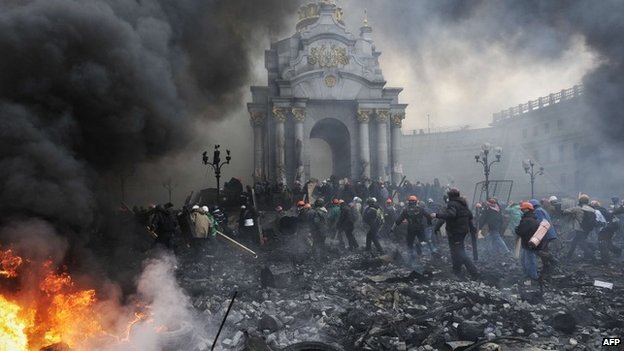
ukraineEvents in the Ukraine are both confusing and potentially very far reaching for Russia and indeed all of Europe. As ever, history has informed much of present day developments. If you want to know more, then please click on this excellent BBC page. It gives you the timeline of events, highlights the key individuals and explains what is driving the street protests. You should particularly look at page on the East – West faultline.

Mr Kydd.

Posted in Enrichment, history in the news | Comments Off on Understanding the what is happening in the Ukraine

Alfred the Great

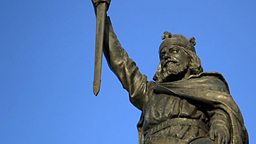
alfredFollowing on from the discivery of the remains of Richard III, I have posted on the question – why should historians be interested in the remains of monarchs ? Indeed, as many of you know, there is presently a campaign to find the last resting place of Henry I in the ruins of Reading Abbey. Whatever your position on this, may I suggest that you take the opportunity to watch The search for Alfred the Great. This was on BBC2 last night, and gave a real insight into how archaeologists use modern scientific methods to solve the problems that face them.

Mr Kydd.

Posted in Archaeology, history in the news | Comments Off on Alfred the Great

All the First World War comment will go here…

generals-at-buck-houseAll,

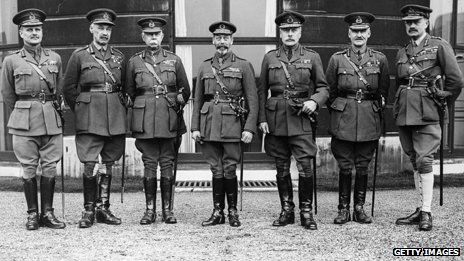
It is only 20th January, and already we have had a deluge of comment on 1914. I though the best way forward would be to use this post as a place where you can find it all.

1. A good starting point is this BBC page which has many of their programmes and video reports on 1914.

2. Here Dan Snow debunks ten myths of the Great War.

3. 24/1 – Here the BBC looks at the censoring of war reporters in the war years.

4. 24/2 Here the BBC looks at The English expressions coined in the War.

 More to follow…

Mr Kydd.

Posted in history in the news | Comments Off on All the First World War comment will go here…

2014 – A year of anniversaries- history and politics will collide…

ba3.JPGHappy New Year all,

In part at least I expect that you are looking at 2014 in terms of your forthcoming examinations (keep going with the mocks revision by the way). It is however also the anniversary of some emotive, and thus politically sensitive events in British history.

This summer sees the 700th anniversary of the Battle of Bannockburn (just before the Scottish referendum in September), and the 100th anniversary of of the start of the First World War. Politicans have already had much to say about both.

More of the former at a later date. However, the secretary of state for education, Michael Gove, has already written this article in the Dail Mail entitled Why does the Left insist on belittling British heroes ? attacking the representation of “the conflict…through the fictional prism of dramas such as Oh! What a Lovely War, The Monocled Mutineer and Blackadder as a misbegotten shambles – a series of catastrophic mistakes perpetrated by an out-of-touch elite.”

Unsurprisingly, the shadow secretary of state, the historian Tristrum Hunt disagrees. You can read his reply from the Guardian Michael Gove, using history for politicking is tawdry here. He argues that “contrary to the assertions of Michael Gove… the left needs no lessons on “the virtues of patriotism, honour and courage”. 

I have included links to both articles, so you can read them in their own words in full. There is also plenty more comment in the papers about this. Have a look and see what you think. One final point – is all of this helpful to us as historians ? Do we want politicans talking in the media about history anymore than we want historians in the media talking about politics (see my earlier post on the 2011 riots and David Starkey) ? One thing is sure, whether we want it or not, there will much more of this throughout 2014.

Mr Kydd.
Posted in history in the news | Comments Off on 2014 – A year of anniversaries- history and politics will collide…

The cartoon that came in from the cold

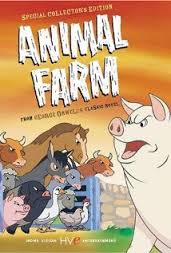
Animal FarmYear Thirteen,

You may remember in the last week of the summer term we watched the 1955 cartoon version of  Animal Farm as part of your introduction to the Russian dicatorships course. What I did not realise at the time was that although a British film, it was paid for by the CIA. This article by Karl Cohen in The Guardian explains the remarkable story of how US intelligence secretly funded the landmark British movie. Animated propaganda was not of course new (it had been widely used in the Second World War), but what makes this noteworthy for me is that this was a huge box office success and critically acclaimed.

This certains helps to explain the diversion from the Orwell book. In terms of the chronology of our course, we should refelct that it would have been made when Stalin was still alive, when the Korean War was still raging, and before Khrushchev started to speak of peaceful co-existance.

Maybe it is worth rewatching it with this iinformation in our heads.

Mr Kydd.

Posted in history in the news, Political cartoons | Comments Off on The cartoon that came in from the cold

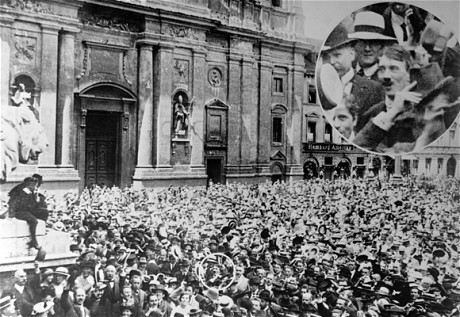
Is the face in the crowd really a young Adolf Hitler’s?

hitler_2728860cMost of you will have seen this picture before. It shows the declaration of war in 1914, featuring what appears to be a young Adolf Hitler. The photograph was used by the Nazis to illustrate Hitler’s life-long loyalty to Germany. However, this letter to the Daily Telegraph from Dr Sean Lang from Anglia Ruskin University suggests that there are serious questions about its authenticity.

He argues “photographs of Hitler taken during the war show him with a large moustache, of the sort that was in fashion at the time. The practice of shaving moustaches down to a “toothbrush” shape seems to have been introduced during the war to allow men to wear gas masks more comfortably; the fashion was unknown before 1914.

If the photograph is correct, then Hitler, almost alone in Europe, wore a toothbrush moustache in 1914, grew a big moustache during the war, and then went back to a toothbrush style after the war, none of which seems very likely”.

Have a look for yourself and see what you think.

Mr Kydd.

Posted in history in the news | Comments Off on Is the face in the crowd really a young Adolf Hitler’s?

What should the historian think about the death of Nelson Mandela ?

MandelaWell the obvious answer to that is it is up to you. Moreover, many of you will have a clear understanding  of what Nelson Mandela did to destroy Apartheid from your GCSE coursework. 

Yet, since studying Mandela, you will have moved to you A Level studies, and can reflect that today most historians prefer to consider the roles of ideas (such as nationalism and economics) rather than the works of great men. Think for example about the role of Garibaldi in the unification of Italy. Today perhaps only Mikhail Gorbachev could come close to Mandela in having a reputation for fulfilling that idea of a great individual who changed the world for his role in ending the Cold War in a peaceful way.

Perhaps it is too soon to dispasionately answer the question. What is certainly unquestionable is few people now alive will ever be as loved as  Nelson Mandela. You may also like to watch this excellent BBC review of his life.

Click the hyperlinks to see what you think.

Mr Kydd.

Posted in history in the news, Obituaries | Comments Off on What should the historian think about the death of Nelson Mandela ?

Coursework Source booklet

ColdWar_411Year Thirteen,

As requested, please find the coursework source booklet here

Miss Bee, Mr Taylor and Mrs Rayner.

Posted in Uncategorized | Comments Off on Coursework Source booklet

Presenting the Past – How the Media Changes History

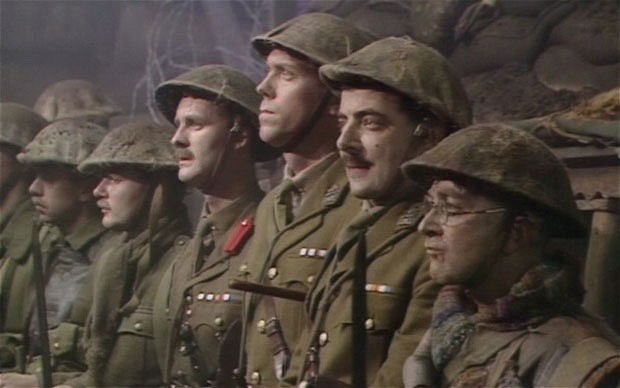
Presenting the pastOr, as those of us at the History Society on Tuesday reflected when we discussed teh Battle of the Somme – the Blackadder effect. This BBC Radio 4 programme discusses the relationship between the past and the media.

The programme discription states “change has swept through the way history is presented to the public. Programmes, films and books dealing with the past used to emphasise authority and accuracy as their great strengths. While those elements are still valued, argues historian and broadcaster Juliet Gardiner, the over-riding aim now has become to present an authentic view of the past. But how is that achieved? And what happens when the desire for authenticity conflicts with the facts?

Drawing on her role as an historical adviser on television programmes, feature films and to writers of historical fiction over the years, Juliet Gardiner shows how directors, writers and producers achieve authenticity in their work and how this affects the history we see, read and hear. She also lifts the veil on behind-the-scenes tensions and disagreements over how far the facts should be bent to achieve the precious authentic feel.”

Have a listen, and see what you think.

Mr Kydd.

Posted in Enrichment, historians, history in the news | Comments Off on Presenting the Past – How the Media Changes History