The Invention of Italy

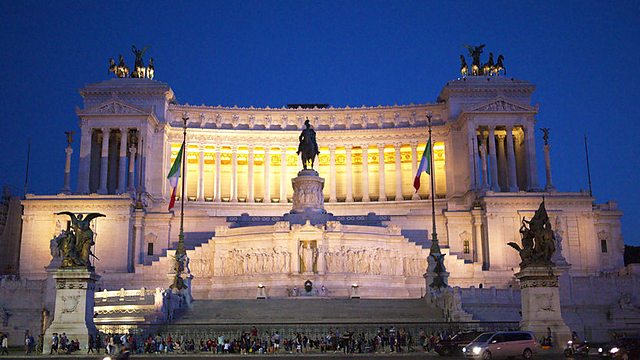
ItalySomething (mainly) to support AS students with their document work. BBC Radio 4 are in the process of running a three part series on Italian Unification called  The Invention of ItalyEpisode two was on tonight, and appears to be most useful to us as it takes the narrative from Napoleon to Garibaldi.

The programme description states;

In October 1860, on a misty road north of Naples, Giuseppe Garibaldi met the future king of Italy and handed over control of the south. This brief moment in the story of the new Italian state has been often mythologised, but it is not as straightforward as it seems. Violence, civil war, the birth of the mafia – these elements in the story are often overlooked.

Beginning with Napoleon’s call to the peoples of Italy in 1796, Misha Glenny picks his way through Italian unification with clarity and care. Rome only became part of this new European country under a century and a half ago – and even then the Pope ordered his followers neither to stand in nor vote in elections for the new state. Small wonder some claim that Italy is not really unified yet.

With expert contributions from Christopher Duggan, Marco Meriggi, Leoluca Orlando, Lucy Riall, Lucy Hughes-Hallet, Filippo de Vivo, David Gilmour, Beppe Severgnini, Simon Winder, Joze Serbec and David Laven.

Have a listen and see what you think.

Mr Kydd.

Posted in Enrichment, history in the news | Comments Off on The Invention of Italy

Timewatch

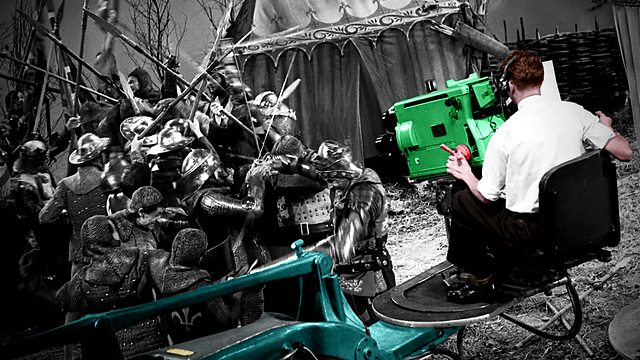
cy1y-30fdaevx6cxl-lguowOne of the things that I hope to achieve with this section of the heathenhistory website is to bring you into contact with aspects of the past that are not taught in the classroom. For this, the BBC history series – Timewatch – is perfect. Each week it looks at a different topic, and in this way, past programmes can be an excellent introduction into matters as diverse as Hadrian’s Wallthe gunpowder plot and the iron age bog bodies.

If you click here you can get sample clips that might interest you. Many of the full episodes are available on Youtube here.

Enjoy,

Mr Kydd.

Posted in Enrichment | Comments Off on Timewatch

Black History Month

blackhistoryWitness: Black History

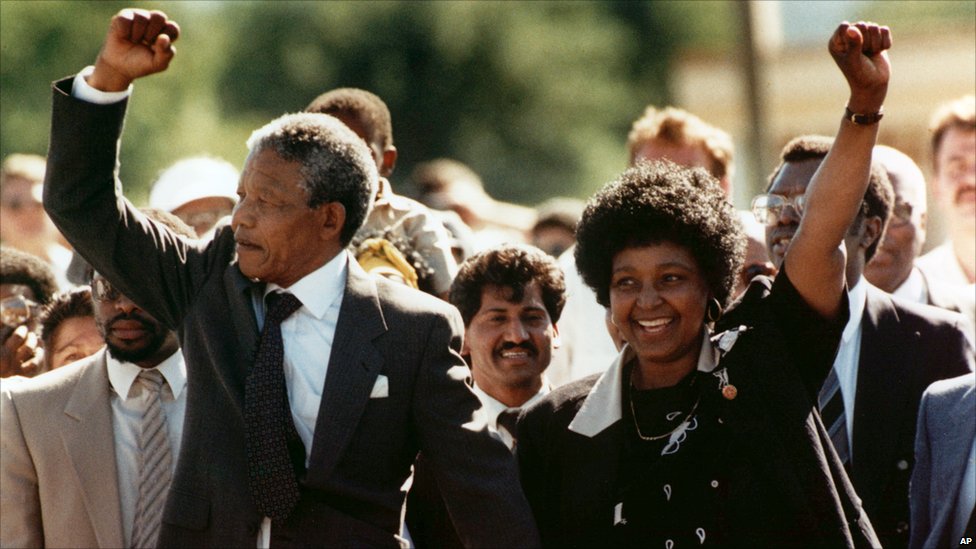
For Black History Month, you may like to listen to interviews with people who were there at key moments in civil rights history, from Martin Luther King’s ‘I have a dream’ speech, to surviving Robben Island with Nelson Mandela.

These programmes are taken from the BBC World Service programme Witness, 2009 – 2013 and can be found by clicking here.

Mr Kydd.

Posted in Enrichment, history in the news | 1 Comment

History enrichment – Elizabeth and her people exhibition at the National Portrait Gallery

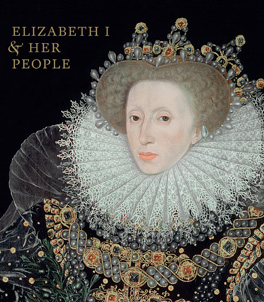
NATPG011_P0250EDelizabethJkt.inddThe National Portrait Gallery in London is running an exhibition entitled Elizabeth I and her people this Autumn. In their words the aim is to explore “the story of the Elizabethans from the Queen, the nobility and gentry to the many other talented individuals such as explorers, soldiers, merchants, artists and writers”. Click here for directions, and here to watch curator Tarnya Cooper introduce the exhibition. If you click here you can play the “Who do you think you were ?” game to find out where you would have been in Elizabethan society.

To find out more about Elizabeth society you should also come to History Society next Tuesday when I will be showing the Court episode of Ian Mortimer’s Time traveller’s guide to Elizabethan England. This was the BBC adaptation of the excellent book. There will be cake.

If you have never visited an art gallery then the National Portrait Gallery is a great place to start. It is a very special place, and it is free (although the exhibition itself is £11.50). It is full of surprises, and it is only round the corner from Mr Woo’s Chinese Restaurant – all you can eat for £5.50.

Tudors and Chinese – what more could you want from half term ?

Mr Kydd.

Posted in Enrichment | Comments Off on History enrichment – Elizabeth and her people exhibition at the National Portrait Gallery

Lord Castlereagh: Europe’s forgotten father ?

castlereagh-1

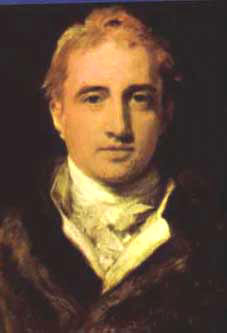
Lord Castlereagh, was one of the most successful and controversial political figures his day. He was a master diplomat, noted as the architect of the 1801 Act of Union that brought Ireland under the control of Westminster, and as a key figure in the defeat of Napoleon. You have probably come across him when you studied the Congress of Vienna.You may also know about his terrible death.

Click  here for a super BBC audio slideshow on his life by Brian Henry Martin and Ian Knox. They have also collaborated on a documentary that tries to understand the brutal actions of this flawed and forgotten political colossus.

Mr Kydd.

Posted in Enrichment | Comments Off on Lord Castlereagh: Europe’s forgotten father ?

History Society

Exclaimation mark - YellowJust a quick thank you to all of you who pitched for the first Society meeting. Good cake, and Nick’s review is in the comments section on the page above.

It was a pretty grim way to start, but the Warsaw Rising will clearly help you with your coursework. If you want to know more then I will order a copy of Norman Davis’s Rising ’44 for the library.

Mr Kydd.

Posted in Uncategorized | Comments Off on History Society

Things to listen to – what is environmental history ?

making historyIf you click here you will get the latest edition of Making History from Radio 4. It has been recommended to me by a friend of the site (ok – Mr Podesta). What is noteworthy to us as A Level historians is that it is a discussion about the environmental history of the Fens. For the record I had never heard of the breedlings before, and I now want to find out their fate. More broadly, as Helen Castor suggests, “a landscape that changes is a landscape that loses its memory”. This is an interesting idea, and remember that you can see the Tudor programme of her excellent She Wolves series in history society in October.  

Environmental history is a form of study that is relatively new here, but is very fashionable in the USA. I think it reflects two trends in  academic history.

1. The increased use of new technology and scientific methods.

2. The increased specialisation of academic history.

 Have a listen and see what you think.

Mr Kydd.
Posted in Archaeology, Enrichment | Comments Off on Things to listen to – what is environmental history ?

Things to look at. Why is Goebbels scowling here ?

joseph-goebbels-scowling-at-photographer-albert-eisenstaedt-after-finding-out-hes-jewish-caA couple of original finds from a friend of the site.

If you click here you can see a series of old black and white photographs converted to colour. For me particularly noteworthy is the thumbnail image on the left of Joseph Goebbels scowling at photographer Alfred Eisenstaedt after finding out he’s Jewish in 1933. Have a look and see what you think.

This link takes you to a diagrammatic representation of the relative power of the great states since 2000BC. It shows the ebb and flow  of power well, but the later stuff does feel rather western. There is no insight into how the judgements were made. I would be interested to know what you think.

Mr Kydd.

Posted in Enrichment | Comments Off on Things to look at. Why is Goebbels scowling here ?

History Society – Autumn Term programme

Morgan Stanley Great Britons Awards 2006I have published the history society programme for Autumn term. The downloadable version for you can be found here. They will usually be 3.30 to 4.30 on Tuesday (with cake) in T10.

The more observant of you will have noticed that the Society now has its own page on the bar above the newsfeed. The plan is that this is where we will post the reviews of what we watch, read and visit.

Mr Kydd.

Posted in Enrichment | Comments Off on History Society – Autumn Term programme

Archaeology in the news

alfredThere have been a number of archaeology stories in the news recently, and I thought it might be good to pull them together in one post for those of you thinking of an archaeology degree. I have said before that archaeology is one of the most dynamic forms of history in that ideas here change much faster than the main stream subject.

I think that it is noteworthy here that all three pieces of research use different technology and scientific methods. I have used the BBC links here, but you might like to consider other news reports to contrast how the matters are reported.

Here aerial archaeologist Toby Drive explains how the recent drought has helped him to discover a rare Roman fort and marching camp in Wales.

Here geophysical techniques have helped archaeologists find a medieval manor house in a Leicestershire village, which “disappeared” three centuries ago. The house, in Croxton Kerrial, near the Lincolnshire border, was last recorded in the 16th Century and had disappeared from maps by the 1790s.

Here the apparent remains of King Alfred in Winchester will be tested for validity.  Invasive samples will be taken for carbon dating as well as isotope and oxygen analysis to show where the person in the coffin was born, brought up and even what they ate.

Mr Kydd.

Posted in Archaeology | Comments Off on Archaeology in the news