Obituary – Penry Williams

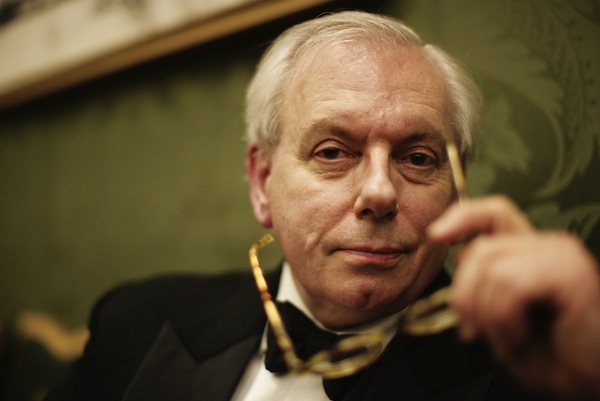
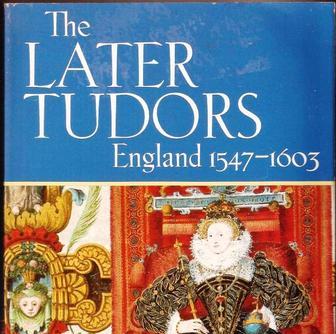
willSincere apologies all, but the pressures of examinations and the end of term meant that I missed the passing of the great Penry Williams in May. Many of you will have come across his text  The Later Tudors as further reading in the Elizabethan course. I have put a couple of copies in the school library, and your unit work booklets have the appropriate chapters highlighted.

This excellent obituary from The Guardian reflects his worthwhile life well. In terms of his work as a Tudor historian, it highlights his debate with G R Elton over the nature of Tudor government, stating “his take on 16th-century government…was… that there was not a revolution in administration led by Thomas Cromwell, as Elton had claimed, but a continued tangle of local patronage and favouritism”. 

As is often the way with historians, this “was vindicated only after bruising academic controversy.” As such, it again gives us an insight into how personal rivalries often energise historical debates. For my part I have always thought Williams has a concise yet busy writing style, that was best when he was working with emperical evidence. See for example chapter 6 of the Later Tudors on economic matters.

Mr Kydd.

Posted in historians, history in the news, Obituaries | Comments Off on Obituary – Penry Williams

History and Policy

graun-gin-laneAll,

A colleague from another school recommended this website to me. History and Policy set themselves the mission of producing “better public policy through an understanding of history by connecting historians, policy makers and the media.” They  believe study of the past can offer important lessons for the 21st century.” They provide access to an international network of almost 400 historians with a broad range of expertise, and offer a range of resources for historians, policy makers and journalists. These include policy papers and the excellent opinion pieces.

There really is so much here that it is overwhelming. Have a look, and see what you think. It is a wonderful opportunity to bring yourself into contact with historians at work.

Mr Kydd.

Posted in history in the news | Comments Off on History and Policy

Henry VIII, the Saddam of the Tudor court ?

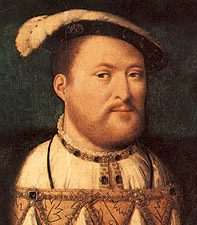
henryjoos-smThere is a  piece of comparative  / journalistic history in The Independent here. In it Professor Kevin Dutton argues that “Henry scores 174 on a “psychopathic spectrum” which starts at 168 (the “average” male scores 112). In The Wisdom of Psychopaths, out in paperback this autumn, Dutton looks at 10 historical figures, including Winston Churchill and Charles Darwin. The Tudor king is his only “bona fide” example: Henry scores highly for emotional detachment and cold-blooded ruthlessness, which Dutton says are characteristics of “dangerous psychopaths”.

Perhaps, and the key point for this research is that there is criteria for this comparative analysis. By instinct however the historian should always be careful when drawing judgements across time and culture. It is a great tool to develop analysis, but as the History Society found out last week when we looked at Ivan the Terrible, it has plenty of pitfalls.

A classic Early Modern example of this is how we should judge the burnings of “Bloody Mary”. Revisionist work on the reign of Mary (such as The Stripping of the altars by Eamon Duffy – I have a copy you can borrow if you want) present avery different picture of the English Counter Reformation.

Read the article and see what you think for yourself.

Mr Kydd.

Posted in history in the news | 2 Comments

AJP Taylor – the first TV historian.

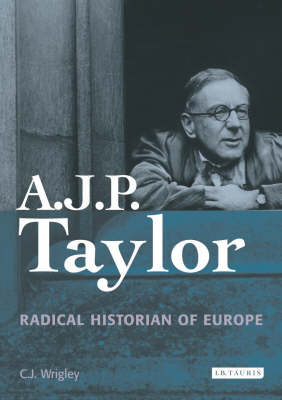
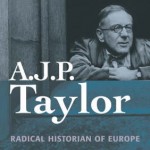
TaylorIt has been particularly pleasing to me to see that the BBC have made available some of their lectures from the 1970s by the legendary radical historian AJP Taylor. I warmly remember my history teacher showing us his half hour programme where, for a few weeks, he convinced the world that the First World War started because of the Russian railway timetable. “That’s how you put an argument together boys” to quote Mr Sneddon…

His lectures are excellent things for an A Level student to consider, not least because they are the very antithesis of much of what is produced today. Compare for example at this trailer for Sky’s “The British” with Taylor’s discussion of Europe in 1940 here, and you can draw your own conclusions about style V substance. Moreover, the fact remains that Taylor’s lectures regularly drew in over 10 million viewers on Sunday nights. As Dhruti Shah comments, there were not special effects, rather “he drew in the audiences with his strong opinions and unscripted lecture.” A BBC article on Taylor can be found here.

Taylor is sometimes accused of putting clever arguments before solid history. To that effect you might like to read this review of a recent biography of Taylor. It states,“while a few of his books – especially The Struggle for Mastery in Europe (1954), English History, 1914-45 (1965) and the provocative Origins of the Second World War (1961) – are still read, none is considered entirely reliable”. Perhaps, but that misses the point. All three are utterly extraordinary, and I will happily lend you my copy for a summer read if you want to come into contact with a touch of genius.

Finally, and above all please do take the chance to watch him at his best.  Here he discusses Churchill’s reputation. 

Mr Kydd.

Posted in historians, history in the news | 3 Comments

Enrichment opportunity – Propaganda: Power and Persuasion exhibition at the British Library.

bert_the_turtle_1951lgeAll,

This is the link to a very special exhibition at the British Library in London which is well worth a visit this summer. Moreover you with youth on your side (ieyou are under 18) get in free.

The Propaganda: Power and Persuasion exhibition explores “international state propaganda from the 20th and 21st centuries. From the eye-opening to the mind-boggling, from the beautiful to the surprising, posters, films, cartoons, sounds and texts reveal the myriad ways that states try to influence and persuade their citizens”. I have spoken to two people who have been been and they claim it is genuinely thought provoking. I intend to go this summer, and I wrmly recommend it to you.

Oh, finally the chap in the picture is Bert the Turtle – he was the face of US Civil Defence when nuclear war threatened in the 1950s and 1960s. You can watch the whole film here .

Duck and cover everyone.

Mr Kydd

Posted in history in the news | Comments Off on Enrichment opportunity – Propaganda: Power and Persuasion exhibition at the British Library.

Changes to the front page

Exclaimation mark - YellowAll,

Just a quick post to say I have tried to tidy up the front page a bit. As you can see there are now two new pages – revision and debates. I have taken the posts on these topics from the newsfeed, and re-posted them there. The aim is make the feed below only for enrichment and history in the news.

Mr Kydd.

Posted in Uncategorized | Comments Off on Changes to the front page

The History Society.

A Rake's Progress (plate 7) 1735 by William Hogarth 1697-1764Summer 2013 – The Russia season

(part one)


Welcome back Year Twelve, and especially welcome to your Russian dictatorships course. To get you in the mood for the extraordinary journey that you are about to undertake the History Society (the attached image is of an earlier meeting) will be running a series of enrichment programmes after school in T10 from 3.30 this term.

  • Tuesday 25th June – Timewatch compares Ivan the Terrible and Stalin . A super introduction to synoptic writing and there will be violence. 1 hour.


  • Monday 1st July – Timewatch search for the real Rasputin. There will be rude bits, and it an interesting way in to considering the role of the individual in History. 1 hour.


  • Tuesday 9th July – Stalin – Man of Steel. David Reynolds discusses how Stalin almost lost the Great Patriotic War. The impact of war is another key theme of this course, but really the worth of this session is to help you understand the scale of Russian history, and the nature of the relationship between the rulers and the ruled in a totalitarian state. 1½ hours.

There will be cake…  

See you there.

Mr Kydd.

Posted in Site News | Comments Off on The History Society.

Could two brass coins re-write Australian history ?

ancient-coins-australiaIt was Captain Cook in 1770 who first brought the outside world to Australia – well perhaps. However, this article from Australian Geographic presents the possiblitity of earlier contact and trade. This is one of the ninth century Kilwa coins found on a beach in Northern Australia in 1944. It raises the possibility that the Aboriginal people were part of a trading network hundreds of years before Cook, which reached to East Africa. Nothing is certain yet, and research continues. Indeed, there are certainly plenty of other ideas about how the coins got there. However,if this was the case it would a significant change in our understanding of the history of Australia.

Mr Kydd.

Posted in history in the news, Uncategorized | Comments Off on Could two brass coins re-write Australian history ?

1913: When Hitler, Trotsky, Tito, Freud and Stalin all lived in the same place

viennaThere is a super little article here from the BBC website by Andy Walker. It highlights the apparent coincidence that in 1913 Hitler, Trotsky, Tito, Freud and Stalin all lived Vienna at the same time. The article rightly suggests that this in part was a reflection of the city at that time stating that – “Vienna was its own kind of cultural soup, attracting the ambitious from across the empire”…and continuing “you didn’t have a tremendously powerful central state… If you wanted to find a place to hide out in Europe where you could meet lots of other interesting people then Vienna would be a good place to do it.”

Perhaps. It is certainly attractive to see Vienna fulfilling the role filled in part by the internet in intellectual debate today. I would add however that perhaps this article misses a point. A lot of these soon to be famous men would have remained in the footnotes of history if it was not for the war that broke out in Europe the following year. This not only ended Vienna’s role as the melting pot capital of a multi-national empire, but it also, to quote Trotsky himself acted “as the locomotive of change”.

Have read and see what you think.

Mr Kydd.

Posted in history in the news | Comments Off on 1913: When Hitler, Trotsky, Tito, Freud and Stalin all lived in the same place

Return to Stalingrad: Nostalgia for Uncle Joe alive and well in Volgograd

stalingradAs many of you know, this weekend marks the 7oth anniversary of the German surrender at Stalingrad. It is, in itself, a battle of huge significance worthy of study and report. As the most famous text on the topic – Antony Beevor’s 2007  Stalingrad – states, “The battle for Stalingrad became the focus of Hitler and Stalin’s determination to win the gruesome, vicious war on the eastern front. The citizens of Stalingrad endured unimaginable hardship; the battle, with fierce hand-to-hand fighting in each room of each building, was brutally destructive to both armies. But the eventual victory of the Red Army, and the failure of Hitler’s Operation Barbarossa, was the first defeat of Hitler’s territorial ambitions in Europe, and the start of his decline.” I have a copy which I am happy to lend to you if you are interested.

It is thought up to 1.2 million people died in this key battle, and it is perhaps this scale that has led to some excellent journalism to mark the date. A good place to start might be the BBC’s news report here and their picture slideshow here. If you really want to understand what happened then episode 9 of the World at War series is pretty definitive (and again I have a copy if you want to borrow it).

However for us as A Level historians it is the this report from the Independent that is most useful. It raises two pertinent questions.

1. It addresses the point that Dani made last lesson about why (and to what extent) Stalin is still popular (even loved ?) in Russia.

 “Behind the Mother Russia memorial (shown in the image above) is a museum dedicated to the wartime leader. No Soviet hangover, it was opened just six years ago by a local businessman (who was later shot in a contract killing), and features biographical data and a life-size waxwork of Stalin. On sale in the shop are Stalin calendars with soft-focus photographs of the Generalissimus in various modes: pensive, jovial, warrior-like.  “Don’t believe what people tell you about the cult of personality,” guide Irina Rubayeva told a class of 30 schoolchildren touring the museum earlier this week. “Yes there was a cult, but oh, what a personality there was too! ”

2. It considers Russian criticism of Beevor’s work.

“They challenge two dominant clichés in Western scholarship about the Red Army: firstly, that the soldiers were simple peasants with no real loyalty to the Soviet state; and secondly, that they were coerced into battle at gunpoint, and that is the only way that the Soviets got them to fight.”

Perhaps these two arguments overlap. See what you think.

Mr Kydd.

Posted in history in the news, Site News | Comments Off on Return to Stalingrad: Nostalgia for Uncle Joe alive and well in Volgograd