Where is the final resting place of Giuseppe Garibaldi ?

garibaldiA nice article here from the BBC about the hunt for the final resting place of Giuseppe Garibaldi. It is generated from a BBC Radio 4 From Our Own Correspondent programme, which is has a link from the webpage.

As the article suggests, “he had made very clear that he wanted to be cremated…and…he had written that it should be done on a spot near his house, overlooking the sea – and had even specified which type of Sardinian wood should be used. He had said that his coffin should be open, so he would have his face to the sun as his pyre was set ablaze. He hoped ordinary Italians would take away his ashes and mix them with the earth of the motherland, and that from them gardens might grow that would symbolise a new and better Italy. But all these last wishes were ignored. It seems to have been decided that the national hero’s body could not just be burned. Instead, he was buried in a tomb in the grounds of his home.”

However this is not the end of the story. Have a read and see what you think…

Finally, all of this is typical of Garibaldi. Beyond the unification course he is perhaps most noteworthy to us because he is one of the best examples of a historical figure distorted by a romantic haze. We should, as historians, always be wary of this. Today we are more interested broader forces of change like nationalism and economics. To switch from Italian unification to events in north of the Alps in Germany for example, few today would disagree that it was “coal and iron” rather than “blood and iron” that led the Kliendeutch unification.

But then again, it was Bismarck that said that…

Mr Kydd.

Posted in history in the news | Comments Off on Where is the final resting place of Giuseppe Garibaldi ?

Obituary – David Lomon

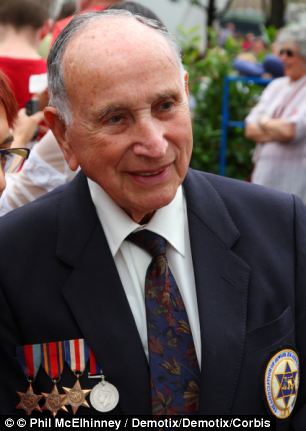
I must confess that I am rather disappointed that the passing of Mr Lomon has not received more attention. He was the the last surviving British-based member of the International Brigade, who fought General Franco’s fascists in the Spanish Civil War. The International brigade were a volunteer group, whose numbers included George Orwell and Laurie Lee. They were committed to stopping the spread of Fascism. In their own words, “they came because their open eyes saw no other way”. Subsequent events of course would show the far-sightedness of their actions.

The best report on his life is from The Independent here. As the passage below shows, he was a man who had the courage to put his own life at risk to defend freedom. He saw the folly of appeasing a bully and “turning a blind eye”. He certainly never took an easy option. That at least is noteworthy for those of us living in more cynicial times. 

“Mr Lomon fought in the battle of Teruel and in the Aragon offensive, where republicans faced overwhelming odds. Franco’s forces were equipped with 950 aeroplanes, 200 tanks and more than 100,000 troops provided by Mussolini. But on 31 March 1938 he was captured and subjected to beatings by guards, starvation rations and verminous conditions. Almost one in five of the hundreds captured did not survive. Eventually, he was freed after a prisoner-of-war exchange in 1938 for Italian captives held in Britain”.

Mr Kydd.

 STOP PRESS

An interesting post from someone who clearly knows more about the topic than this Tudor specialist. I have included an extract below – they do say a little bit of knowledge can be dangerous…

“…by the way – two small factual details: George Orwell didn’t fight with the International Brigades, but with the POUM militia. And while Laurie Lee did join the IBs, he probably never actually fought in Spain (he was epileptic).”

Richard Baxell

I will put up a link to Mr Baxell’s site.

January 2013

Please find that link here.

Posted in history in the news, Obituaries, Uncategorized | 1 Comment

What is the importance of political cartoons ?

Historians of course consider and use political cartoons in different ways. You will have first come across them as GCSE standard when you looked at them as snapshot comments of the big issues of the day. There really excellent article here from the BBC on this issue. Lord Baker, a former Conservative education and home secretary, as well a party chairman, is something of an expert on the topic. He has a theory that  political cartooning is in itself of historical note. He considers it to be a British invention, and argues that it helped us to avoid revolution, stating that “if you can laugh at your rulers, you don’t cut off their heads”…”Laughter is an escape for those kinds of pent up feelings. It helps make society calmer.”

Perhaps. Or perhaps it was the freedom of speech required for political cartooning to flourish that helped us avoid revolution. In others words it was more of a product of political toleration than a cause of it. What is clear is that when Lord Baker was an active politician in the 1980s and early 1990s he took Spitting Image depicting him as a slug (Youtube it) with good grace. Read the article and see what you think.

If you are interested in political cartoons come you may like to know that there is the Cartoon Museum in London (off Little Russell Street). You might also to look at the archive of the incredible Steve Bell’s work for the Guardian (go to www.belltoons.co.uk). In addition, I have an unhealthly large collection of books on many aspects of the topic which you are welcome to borrow.

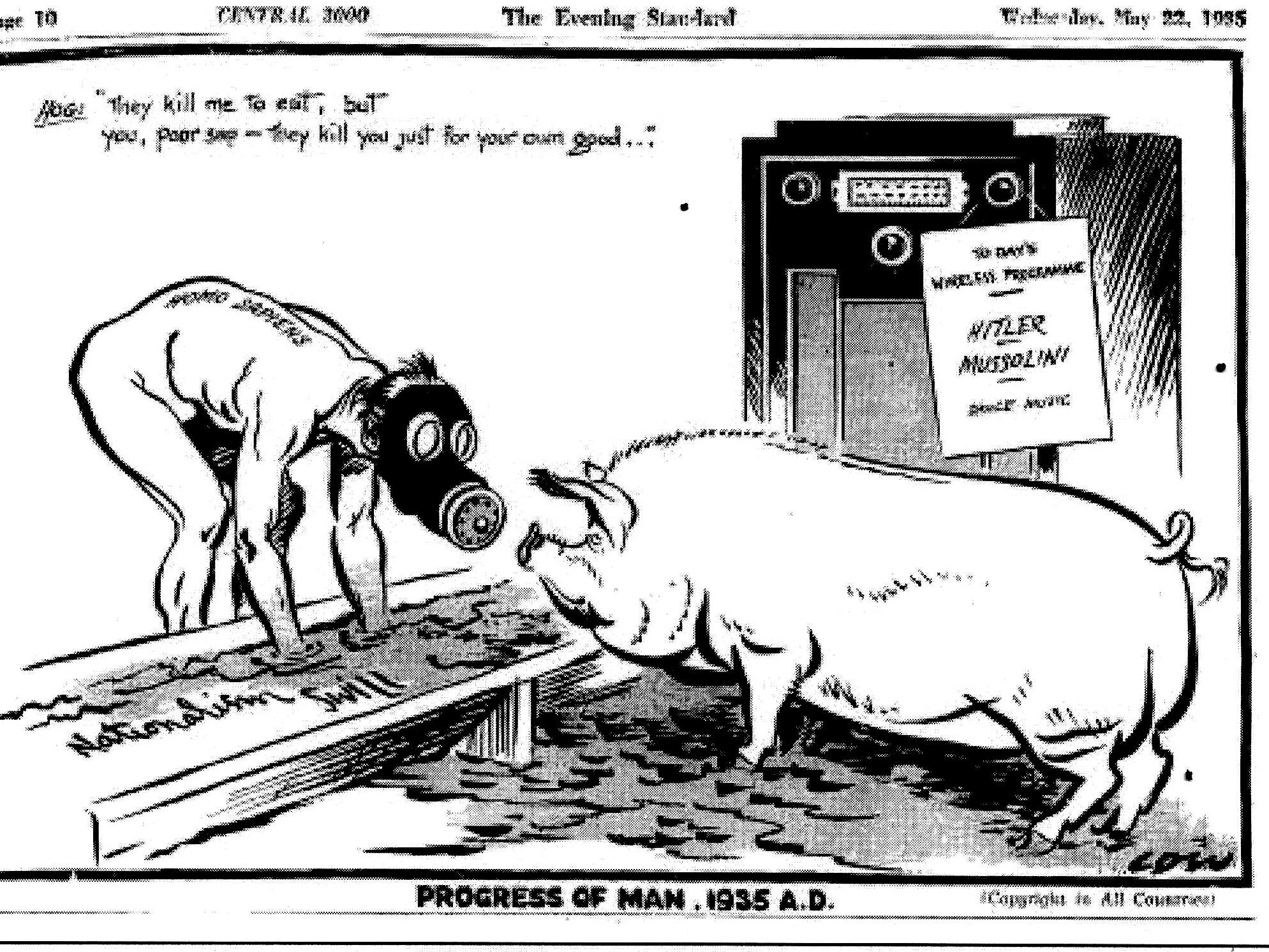
Finally, if you did do GCSE History with us you will be well aware of the work of David Low. Famed for his early and forthright attacks on the European dictators. There is a very brief collection of some of his work here. Low was so hated by Hitler that his name was on the black book of people to be immediately arrested after the successful invasion of Britain. The image above is a less well known piece of his work; but it is one of my favourites. Entitled “Progress of Man, 1935” it is visually striking, with a pig and a naked gas masked man feeding at the trough of nationalism. The pig is pitying the man, saying “they kill me to eat. But you poor sap – they kill you for your own good.”

It is a comment that still resonates 77 years later.

Mr Kydd.

Posted in history in the news, Political cartoons | Comments Off on What is the importance of political cartoons ?

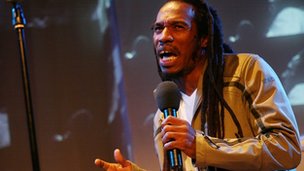
Benjamin Zephaniah warns ‘black children are turned off history’

In many respects this post follows on directly from the last one – which asked what is the purpose of history was within society. Here the Benjamin Zephaniah complains about the diet of black history presented in many schools. I have to say I have always considered Zephaniah to be an original and deep thinker, and as such, much of what he writes here is rather uncomfortable for me.

He argues “most of the history teachers that I come across cannot name any early African philosopher” (I can’t) and he continues that there is a “greater focus on the the work of Florence Nightingale”…than…”the Jamaican nurse Mary Seacole“. I am embarrassed to say that I actually forgot Seacole’s name when the topic came up recently.

Personally, I have always worried about black history being bolted on tokenism,. This is why I have sometimes felt a bit mixed about black history month. On one hand it raises the profile of the topic, but on another I sometimes feel it can be a barrier to the topic being an interwoven part of the history curriculum in its own right.

All of this is a very long way away from  the curriculum review that has been leaked here to the Daily Mail. One thing is clear however, the question of what history is taught in schools is a very controvertial issue.

Mr Kydd.

Posted in history in the news | 1 Comment

What is the role of history in society ?

It is an excellent question.

This article from the magazine section of the BBC website discusses it with energy and style. It is really a version of the old “what is the point of a history degree ?” enquiry that those of us who teach A Level have to deal with every year.

Sarah Dunant’s reply is excellent. It starts thus…

“As far as one can tell the thinking goes like this: the study of history, English, philosophy or art doesn’t really help anyone get a job and does not contribute to the economy to the same degree that science or engineering or business studies obviously do.

Well, let’s run a truck though that fast shall we?…”

Have a read and see what you think.

Oh and just so it doesn’t get lost, she concludes, History. Any society that doesn’t pay proper attention to it not only has dangerously shallow roots, but also risks starving its own imagination.” That’s not a million miles away from what Eric Hobsbawm said in the previous post.

Mr Kydd.

Posted in history in the news | Comments Off on What is the role of history in society ?

Obituary – Eric Hobsbawm

“It is the business of historians to remember what others forget” – I might steal that.

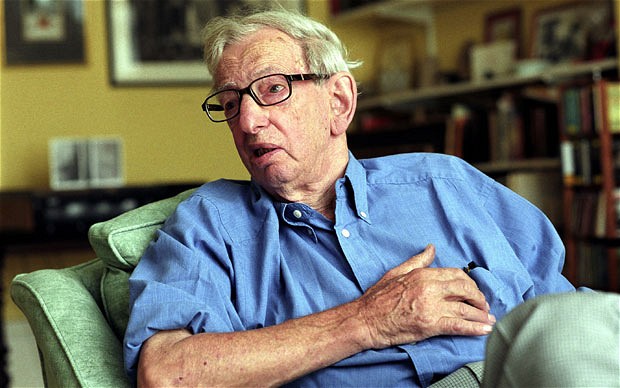
This week of course saw the passing of the great Eric Hobsbawm, and you might be wondering what all the fuss was about. Well, on one level he was the last of the post-war historians who changed our view of the discipline, and wore their politics on their sleeve. On another, it was his natural gift with words as shown above. As an A Level student I can remember my history teacher explaining what Hobsbawm meant by the “long Nineteenth Century”  – he considered the period 1789 to 1914 as one. It is a phrase that has never left me.

But above all, he was, as Niall Ferguson argues here “a truly great historian”. He continues that “I continue to believe that his great tetralogy – The Age of Revoultion (1962), The Age of Industry (1975) The Age of Empire (1987) and The Age of Extremes (1994) – remains the best introduction to modern world history in the English language.”

Such praise is noteworthy given the very different politics of the two men. Ferguson is right of centre, whilst Hobsbawm was a Marxist – in his own words in 2002 he stated that “the dream of the October Revolution is still there  somewhere within me”. There is a nice selection of his work from the Guardian here , and a BBC obituary here . If you would like to read something less complimentary, then A.N. Wilson’s view of Hobsbawm (in the Daily Mail) is here .

Mr Kydd

Posted in historians, history in the news, Obituaries | 4 Comments

150 years ago today – the bloodiest day in American history…

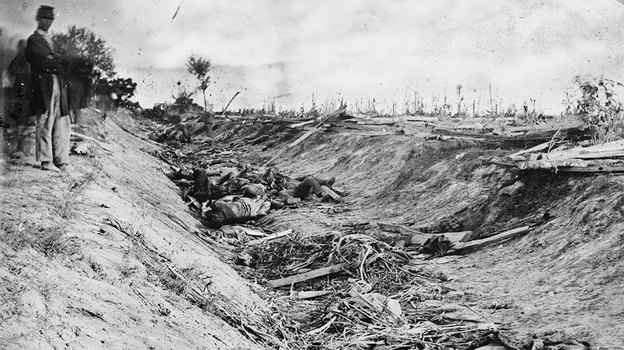
I saw this article about the 150th anniversary of the Battle of Antietam from the American NRP site. It states that “on this morning (17th September) 150 years ago, Union and Confederate troops clashed at the crossroads town of Sharpsburg, Md. The Battle of Antietam remains the bloodiest single day in American history. The battle left 23,000 men killed or wounded in the fields, woods and dirt roads, and it changed the course of the Civil Warbefore explaining how.

What struck me however it the somewhat embarrassing truth that I know almost nothing meaningful about the American Civil War.  I had not even heard of the Battle of Antietam. We in Europe are always so quick to be critical of perceived US parochialism. Perhaps we should look at ourselves a bit first…

Mr Kydd.

Posted in history in the news | Comments Off on 150 years ago today – the bloodiest day in American history…

A follow up article on Richard III’s final resting place

A few weeks ago I posted a story about archaeologists searching for the grave of Richard III. Yesterday they held  this news conference about remains they had found under a council car park in Leicester. As the report states, “the remains had spinal abnormalities and a “cleaved-in skull” that suggest it could be Richard III.”

It will be very interesting to see how the find changes our understanding of a man who has been unquestionably attacked by 109 years of Tudor propaganda.

Mr Kydd.

Posted in history in the news | Comments Off on A follow up article on Richard III’s final resting place

A recommendation from a friend of the site !

In designing our A Level course we were very keen to add the Elizabethan unit for a number of reasons. Above all, it is an excellent topic, but  it also allowed you explore issues of gender, historiography and to understand that History existed before the Congress of Vienna in 1815.

This wordpress site has been recommended to me by an ex-student, and it is well worth a look. It is indeed a A Venerable Read and the focus on the so called Dark Ages could again make you think about what History is. Consider for example this review of Alfred The Great by Justin Pollard;

 If you only read one book on the Dark Ages, make it this one.

 “Splendid this rampart is, though fate destroyed it.

The city buildings fell apart, the works of giants crumble….

Until a hundred generations now

Of people have passed by. Often this wall

Stained red and gray with lichen has stood by

Surviving storms while Kingdoms rose and fell.”

 Out of all the vivid description of life in the eighth century in this book, none stands out more than the comment on the reaction of Anglo-Saxon pilgrims to seeing the Coliseum of Rome in an era when there was not a standing stone building in all of northern Europe. The world we are introduced to is alien, fragmented, distant and almost post-apocalyptic in feel, but unlike the anonymous writers of the Ruin (quoted above), there is no lost nostalgia or sense of longing for the civilisations that came before the Dark Ages.

Mr Kydd.

Posted in Site News | 1 Comment

Is Richard III buried under a Council car park in Leicester ?

Everything about Richard III is just interesting. He is famed as the last English king of England (remember the Tudors were Welsh and the Stuarts were Scottish) and the last King to die in battle (at the Battle of Bosworth in 1485). He is also said to be the target of very unfair propaganda attacking his physical appearance (hump and all) and his actions (many now question if it was he who ordered the murder of the princes in the Tower).

Whilst there is doubt over whether his body was stripped naked (see Harry other Royals have got there before you) and thrown in the river, it does seem that Richard met an undignified end.

Now there is an excellent piece of archaeology from the University of Leicester seeking to identify his final resting place. This work (the Greyfriars project) stems in part from the recent work that relocated the site of the Battle of Bosworth (you may like to refer to the earlier post discussing this revision of the location of the battle site). This article from the Daily Telegraph discusses what the project is trying to achieve.

Mr  Kydd.


Posted in history in the news | 1 Comment