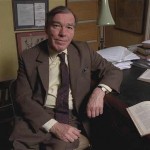
Obituary – Sir John Keegan

As students move into and beyond A Level history they should be aware of how the discipline becomes more specialised. Military history has never really been my thing but I have always had great admiration for two British historians of this genre – both of whom did not just write about generals, but also were able to write about was it was actually like to fight in a war.


Last April the great Richard Holmes died. There is a good obituary for him here. My favourite book by him is Tommy – a typically detailed account of what made the fighting man “tick” in the First World War. Nick Rennison writes of it “Tommy is Richard Holmes’s tribute to the ghosts of the millions of ordinary soldiers who fought in the First World War. The book also reflects the dissatisfaction he feels at the way we still remember it. Too often we approach World War I through the literature it inspired. The poems of Wilfred Owen, Siegfried Sassoon and others have their own truths to offer, but Holmes would dispute the assumption that they represent the experiences of the majority of those who endured the trench warfare of the Western Front.”

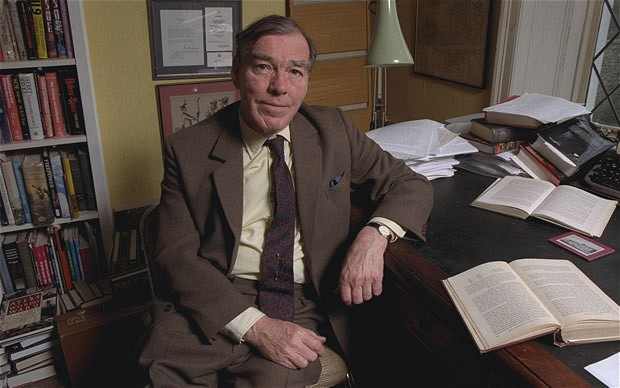
Sir John Keegan died on 2nd August, and his obituary from the Telegraph can be found here. Keegan also wrote about the harsh realities of fighting in a battle in his seminal text The Face of Battle – the Amazon review describes it as follows.  Keegan looks “at the direct experience of individuals at ‘the point of maximum danger’. It examines the physical conditions of fighting, the particular emotions and behaviour generated by battle, as well as the motives that impel soldiers to stand and fight rather than run away. And in his scrupulous reassessment of three battles, John Keegan vividly conveys their reality for the participants, whether facing the arrow cloud of Agincourt, the levelled muskets of Waterloo or the steel rain of the Somme.’ In this book, which is so creative, so original, one learns as much about the nature of man as of battle.”

If military history interests you you could not do much better than starting by reading either Holmes or Keegan. Perhaps it might be best to leave the last words to Sir John Keegan. These are his opening line in “The Face of Battle” – they perhaps reflect the wider challenge faced by all who would write history.

“I have not been in a battle; not near one, nor heard one, nor heard one from afar, nor seen the aftermath. I have questioned people who have been in battle; have walked over battlefields … I have read about battles, of course, have talked about battles, have been lectured about battles and, in the last four or five years, have watched battles in progress, or apparently in progress, on the television screen … But I have never been in a battle. And I grow increasingly convinced that I have very little idea of what a battle can be like …”

Mr Kydd.
Posted in historians, history in the news, Obituaries, Uncategorized | Comments Off on Obituary – Sir John Keegan

Reinterpretation of the cause of the Spitalfields mass graves

In the 1980s a mass burial pit from the 1340s Black Death  was discovered at Spitalfields in London. This report was typical, stating  “it contained two mass burial trenches and a mass burial pit, densely filled with several hundred articulated skeletons, as well as many individual graves…it was…one of two emergency burial grounds created to cope with the Black Death epidemic. It is currently the largest and most comprehensively excavated Black Death cemetery in England.”

Except that it now seems that it isn’t. This report from yesterday’s Observer suggests that recent research, “including radiocarbon dating of the bones and geological data from across the globe – shows for the first time that mass fatalities in the 13th century were caused by one of the largest volcanic eruptions of the past 10,000 years“. As one monk put it at the time, “The north wind prevailed for several months… scarcely a small rare flower or shooting germ appeared, whence the hope of harvest was uncertain… Innumerable multitudes of poor people died, and their bodies were found lying all about swollen from want… Nor did those who had homes dare to harbour the sick and dying, for fear of infection… The pestilence was immense – insufferable; it attacked the poor particularly. In London alone 15,000 of the poor perished; in England and elsewhere thousands died.”

This is not a small reworking of the edge of an argument; rather it is a complete and fundamental reevaluation, made possible by advances in carbon dating. The message for us is clear, History, and historical interpretation has never been static, but now more than ever our assumptions are being challenged by science..

Mr Kydd.

Posted in history in the news | 1 Comment

Archaeology in the News

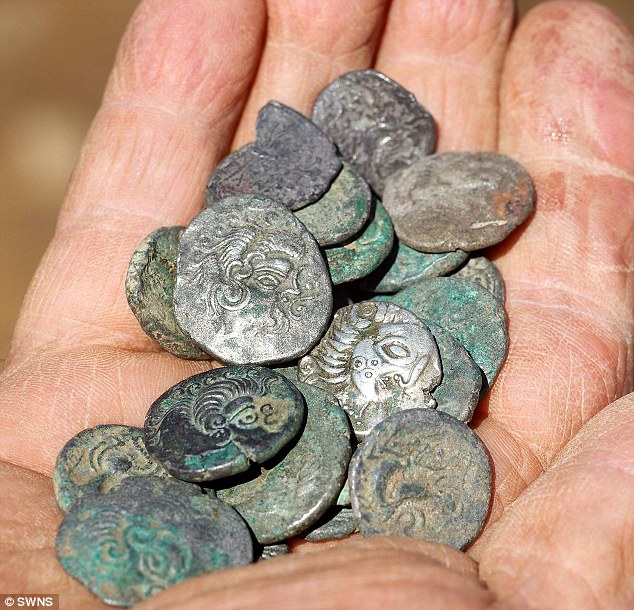
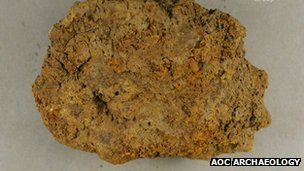
The contents of which photograph do you consider to be more valuable ? These two images come from the two news stories below. In a material sense, the answer is of course clear cut -the coins have an estimated value in excess of £10 million. However, the iron slag pictured below perhaps tells the historian more.

In May it was announced that over 50,000 Roman coins in Jersey. This article from The Guardian is developed well by this BBC News report. Although less glamourous, this report suggesting that the Highlands were a centre of metal production in Iron Age might actually be more significant to us as historians. This is because it potentially could change our understanding of trade and society in Iron Age Europe. Perhaps the north of Scotland was part of an intergrated and specialised economy.

Worth comes in many forms…

Mr Kydd

Posted in history in the news | Comments Off on Archaeology in the News

Alexander the not so Great ?

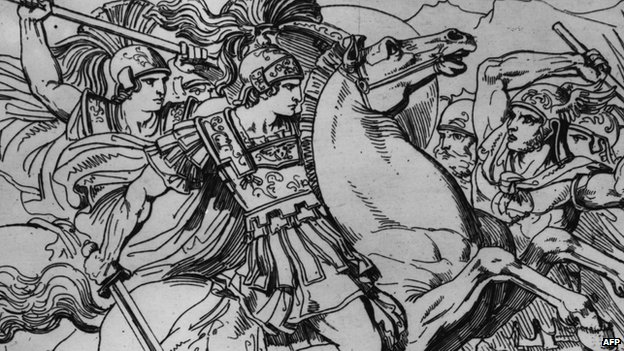
Churchill is meant to have once said “History will be kind to me for I intend to write it”. Perhaps it is an obvious point to suggest that History tends to be written by the winners, but that does not stop it being a valid one as the example of Alexander the Great proves. Few men in the European subconscious have a better reputation. This BBC report starts off by stating the tradition view that  “Alexander the Great, feted in Western culture as the conqueror of the Persian Empire and one of the great military geniuses of history.” 

However Professor  Ali Ansari (the Institute of Iranian Studies, St Andrews University) then goes on to explain  that “the influence of Greek language and culture has helped establish a narrative in the West that Alexander’s invasion was the first of many Western crusades to bring civilisation and culture to the barbaric East. But in fact the Persian Empire was worth conquering not because it was in need of civilising but because it was the greatest empire the world had yet seen, extending from Central Asia to Libya.”

Have a read and see what you think. There is also a Radio 4 Series if you are interested.

Mr Kydd

Posted in history in the news | Comments Off on Alexander the not so Great ?

Some Tudor History in the News

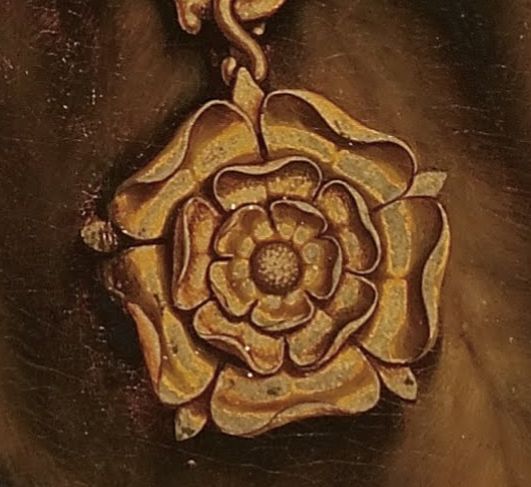
As many of you will have the misfortune to know Tudor history is really my bag, and there certainly has been a lot of it in the news recently. As such, I thought it might be helpful if I posted the links here.

Here Clifton Davies argues that “research shows the term “Tudor” was barely ever used during the time of Tudor monarchs” continuing that “years of trawling through contemporary documents yielded almost no references – with only one poem on the accession of James I (James VI of Scotland) recognising the transition from Tudor to Stuart”.

Here Philippa Gregory and Dr Robert Hutchinson discuss on the Today programme why novelists are so fascinated with the Tudor period. “We’re interested now in historical realism… the grime of it, as well as the rare moments of glamour at the top.”

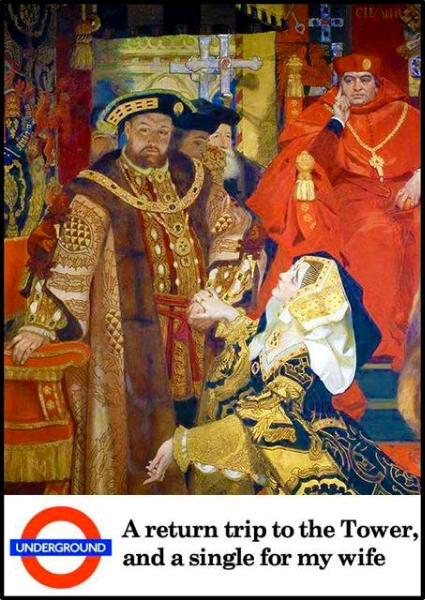
Here Dr Steven Gunn explains why “between 1558 and 1560, almost three-quarters of fatal accidents took place during the summer months.” This can be blamed on “cart crashes, dangerous harvesting techniques, horse accidents and windmill mangling were among the perils facing the Tudor farm worker.” It is of course a bit of fluff, but also perhaps a reminder that little of the renaissance reached the rural England where over 85% of people lived.  This link goes on the strange and stupid deaths of many Tudors (if you accept that term !) – however, as the poster below shows, there were other surefire ways to die…

Mr Kydd

Posted in history in the news | Comments Off on Some Tudor History in the News

David Starkey “Salmond is a Caledonian Hitler”

Those of you who can cast their minds back to the posts on last summer’s riots will remember that David Starkey is not an individual shy of a point of view. This week he compared the Alec Salmond, the Scottish First Minister to Adolf Hitler, stating that both shared a common ability to court popularity by “tapping into nationalism and the idea of a common enemy”. He said Mr Salmond thinks that “the English, like the Jews, are everywhere”, before arguing that Hitler was “more democratically elected”. This article from the Daily Telegraph goes into more detail.

It is of course possible to argue that David Starkey is seeking to be controvertial for his own (financial ?) ends. Indeed he seems to suggest he has done as much before in this BBC interview. Perhaps more interesting however is the Irish view, which can be read here .

Posted in history in the news | Comments Off on David Starkey “Salmond is a Caledonian Hitler”

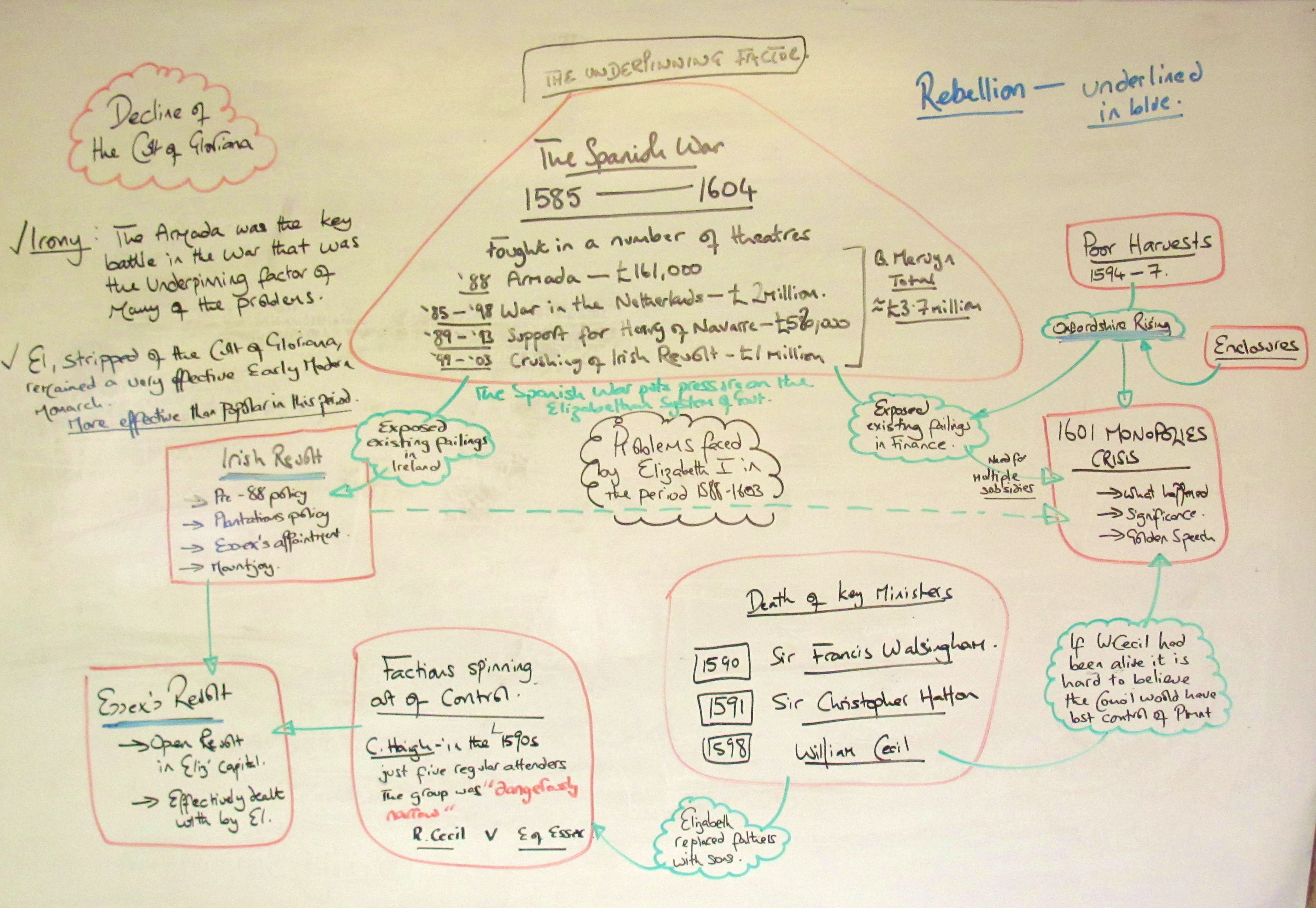
Year Twelve – Unit Six planning map

As promised – please find attached a photo of our plan for the Unit Six problems, and how they link together. If you want some further reading on this then you could do a lot worse than the conclusion to C Haigh’s Profiles in Power on Elizabeth I.

Mr Kydd.

Posted in Site News | Comments Off on Year Twelve – Unit Six planning map

The American Civil War – A significant upward revision of the death toll.

The American Civil War has always felt to me to be something that I should know more about. The truth is it has always passed me by. This article from the New York Times shows how remiss this is. Recent statistical work (again note how computers are allowing data analysis to challenge many long held historical “facts”) has revised the death toll up by twenty percent to 750,000 Americans – more than the losses of both World Wars combined.

As Eric Foner states, “it even further elevates the significance of the Civil War and makes a dramatic statement about how the war is a central moment in American history. It helps you understand, particularly in the South with a much smaller population, what a devastating experience this was.”

Posted in history in the news | Comments Off on The American Civil War – A significant upward revision of the death toll.

The English Revolution…

A couple of articles from the BBC from a period of British History that I find fascinating, but perhaps does not get the attention that it deserves. This Today programme report and this news report cover the auction of a poster from Oliver Cromwell. It ordered the arrest of the future Charles II before he had time to flee abroad. It failed. Conversely, this news report reflects the fate of those judges who signed the regicide document once the Restoration had been secured.

When I was at school the Commonwealth was often refered to as the English Revolution. In more recent times this term appears to be used less. In part I think this is because we still struggle to know what to think about Oliver Cromwell.  There is a fairly neutral introductory biography of perhaps the most controversial of all Englishmen here.

Posted in history in the news | Comments Off on The English Revolution…

If you think it is cold here at the moment…

A bit of military history for you.

I am sure that you all really appreciate the efforts of the caretakers to get the site open today – who wants an early start to Half Term anyway. However cold you might think it feels at the moment, it is of course nothing compared to a Russian winter. Ask Napoleon. This BBC report comes from the excellent “Bullets, Boots and Bandages”. It argues that Napoleon’s failure to equip his horses with winter horseshoes was a ” tiny logistical oversight …that would.. cost him dear. Winter horseshoes are equipped with little spikes that give a horse traction on snow and ice, and prevent it from slipping. Without them, a horse can neither tow a wagon uphill, nor use them as brakes on the way down. In the Russian winter of 1812, this spelt disaster for Napoleon.”

See what you think…

Posted in Uncategorized | Comments Off on If you think it is cold here at the moment…