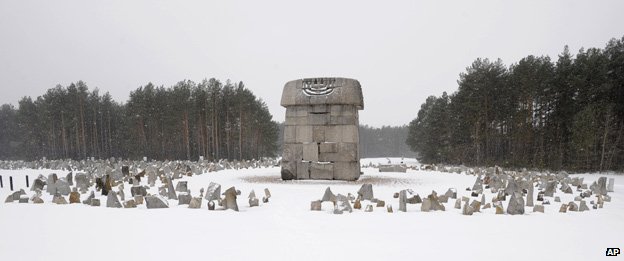
Treblinka: Revealing the hidden graves of the Holocaust

With Holocaust Memorial Day approching I thought it would be appropriate to post this article about Treblinka from the BBC. The mass graves found there expose the nonsense of those, like David Irving (see earlier posts), who deny the Holocaust killed so many. You may also like to look at this short film about the world’s oldest Holocaust Museum.

Posted in history in the news | Comments Off on Treblinka: Revealing the hidden graves of the Holocaust

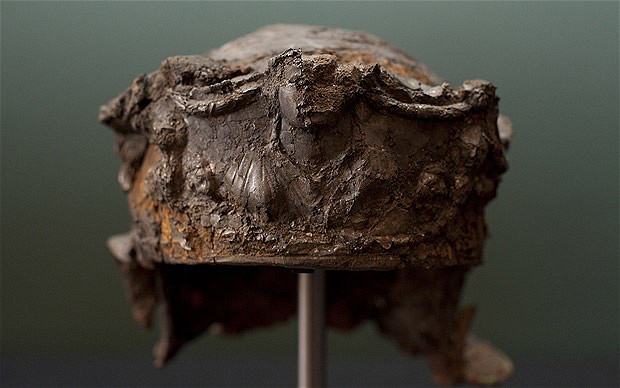
Roman helmet turns history on its head…

This excellent article from the Sunday Telegraph clearly shows the growing importance of archaeology to our understanding of the past. Just like the earlier article on Calleva Atrebatum it shows how recent archeological discoveries have changed our understanding of an aspect of the past.  As the article states,  “The old view is ‘Romans bad, Britons good’. This discovery muddies the waters. You can’t overestimate the shock and surprise when it was first found.” Read the article if you want to know more. You may also like to look at this short piece of video from the BBC describing the restoration process at the British Museum.

Mr Kydd.

Posted in history in the news | Comments Off on Roman helmet turns history on its head…

Revision Support

Date

What

When & Where

Sunday 15th January

Elizabeth

Overview, examiner feedback and planning technique

10 am – 12pm History Block

Sunday 22nd  January

Italy

Overview, examiner feedback and planning technique

10 am – 12pm History Block

For those of you who are sitting AS modules in the next couple of weeks the information above might be helpful. I will do the Elizabeth session next Sunday (10 – 12) and Mr Podesta will do the same for Italy on the 22nd. Entry will be via the Main Gate.

The sessions will be skills based, focusing on examiner feedback and planning. That said, if you have any particular content concern please bring your questions along.

The following attachments may also be helpful for the Tudor paper.

1. All the past questions (by Unit) , examiner guidance and reports.

2.Pre January 2009 questions (by Unit)

If you need anything else please just pop into my office.

Mr Kydd.

Posted in Site News | Comments Off on Revision Support

The ANC – Centenary celebrations

A couple of excellent articles from the BBC to mark the centenary celebrations of the ANC. This video contrasts its early roots as a party of liberation with its post-Mandela disappointments. This Today interview from Radio Four looks at the problems of “a one party democracy”.

Do all revolutions disappoint in the end ?

Mr Kydd.

Posted in history in the news | Comments Off on The ANC – Centenary celebrations

The books that shaped history

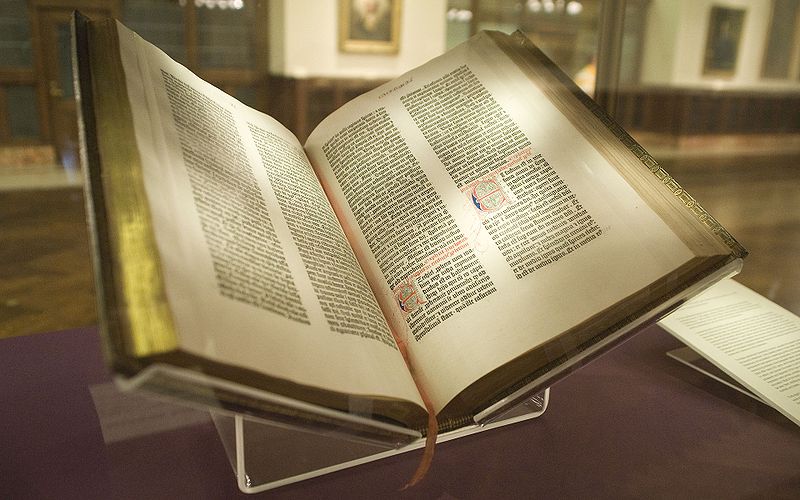
Another excellent audioslide here from the BBC. This one looks at the Gutenberg Bible and the student notes of Sir Isaac Newton (and how writing helped make the scientific revolution of the Enlightenment possible).

As a school boy I can remember my history teacher setting up a class debate “what was the most important invention in History ?” In the end the printing Press used for teh Gutenberg Bible beat penicillin and the Atom bomb. This was because, and the audio slideshow states, “it was the first real book to be mass-produced using movable type printing techniques – and so could be made in a fraction of the time it had previously taken scribes to write by hand.” Soon knowledge would not be just for the rich…

Mr Kydd.

Posted in history in the news | Comments Off on The books that shaped history

Repost – when historians fall out…

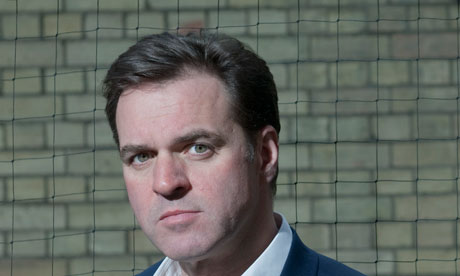
Again I am not going to repost all the articles that were lost. However, the racism row between Niall Ferguson and Pankaj Mishra, is chronicled well in this Observer article provides a good summary. Two questions do seem apposite here;

1. Why do such gifted individuals end up in a slanging match (see the earlier posts on the legendary bad blood between AJP Taylor and Hugh Trevor Roper) ?

2. Why is another historian  (see the earlier post on David Starkey and his comments on the riots) involved in accusations of racism ?

In part, both these issues are a reflection of the human condition at the start of the Twenty first century. But beyond this, how far are they a product of  the nature of studying History ?

Mr Kydd.

Posted in historians, history in the news | Comments Off on Repost – when historians fall out…

“2011 – it reminds me of 1848” – Eric Hobsbawm

You will probably remember from an earlier post that Eric Hobsbawn is a British Marxist historian, most famous for his trilogy of books on the nineteenth century – The Age of Revolution, The Age of Capital and The Age of Empire.

You will certainly remember from your studies of Italian Unification, that 1848 was the year that revolutions swept Europe. Now in his 90s, here Hobsbawm reflects upon 2011 in an interview with Radio 4. He states  “It was an enormous joy to discover once again that it’s possible for people to get down in the streets, to demonstrate, to overthrow governments,” and even compares the Arab Spring to the events of 1848.

See how far you agree with him…

Posted in historians, history in the news | Comments Off on “2011 – it reminds me of 1848” – Eric Hobsbawm

Repost – Rembrance Day articles

I don’t propose to rewrite all this post. However, there were  a number of links which really are worth a look, and it would be a great shame if they were lost forever from the site. All are from the BBC.

1. This link is an audioslide show. It describes how the house from where Wifred Owen wrote his last letter home in 1918 has been turned into a place of reflection and a celebration of his work.

2. This article reflects upon the incredible work of Brian Stevens. He visited the Cenotaph earlier this century, and asked some of the surviving veterans if he could take their photograph. The results support the old saying that a picture is worth a thousand words. Obviously, these people fought in the Second World War. However, in the 1990s, Steve Pyke did something very similar for First World War veterans.

3. This link shows a map and explains where the 3,740 British troops who have died since the end of the Second World War in 1945 died.

4. Finally, this magazine post really is worth a look. It inverts how we look at the losses of the two world wars. Incredible though it might seem, there are only fourteen settlements of village size or larger that did not lose someone in either war. Arthur Mee called them “the thankful villages”.

Mr Kydd.

Posted in history in the news | Comments Off on Repost – Rembrance Day articles

Lost Posts

You may have noticed that the site was down for fours days last week, and that the November posts (including the excellent Remembrance stuff) has now gone.

No real harm done – I will repost these in the holidays.

Mr Kydd.

Posted in history in the news | Comments Off on Lost Posts

The Origins of The Second World War – different approaches to the same topic

The Origins of The Second World War is of course one of the great historical debates of modern times. To be honest it is not really a topic that sets me on fire. I have however included this link from the Wall Street Journal as it contrasts five very different books from five very different historians. They all approach the topic from different directions. For us, it is a good reminder, that the conclusions that a historian draws will often depend upon their starting point.

Perhaps most noteworthy here is the reference to “The Origins of The Second War” by A.J.P. Taylor. This is a massively controversial revisionist text in which Taylor presents Hitler in 1939 not as the bringer of the Holocaust, but as another German stateman with a vague idea to rip up the Treaty of Versailles. For Taylor, the origins of the Second World War should not be seen as a moral question. Hitler was as an opportunist who blundered into war without a master plan. It is perhaps the most controversial history book of the Twentieth Century, but as Taylor’s pupil, Kathleen Burke states, “it broke the log jam of history”.

You might like to wtach the youtube clip below of Taylor discussing the book with his great rival, Hugh Trevor Roper.

Posted in historians, history in the news | Comments Off on The Origins of The Second World War – different approaches to the same topic