Repost – Rembrance Day articles

I don’t propose to rewrite all this post. However, there were  a number of links which really are worth a look, and it would be a great shame if they were lost forever from the site. All are from the BBC.

1. This link is an audioslide show. It describes how the house from where Wifred Owen wrote his last letter home in 1918 has been turned into a place of reflection and a celebration of his work.

2. This article reflects upon the incredible work of Brian Stevens. He visited the Cenotaph earlier this century, and asked some of the surviving veterans if he could take their photograph. The results support the old saying that a picture is worth a thousand words. Obviously, these people fought in the Second World War. However, in the 1990s, Steve Pyke did something very similar for First World War veterans.

3. This link shows a map and explains where the 3,740 British troops who have died since the end of the Second World War in 1945 died.

4. Finally, this magazine post really is worth a look. It inverts how we look at the losses of the two world wars. Incredible though it might seem, there are only fourteen settlements of village size or larger that did not lose someone in either war. Arthur Mee called them “the thankful villages”.

Mr Kydd.

Posted in history in the news | Comments Off on Repost – Rembrance Day articles

Lost Posts

You may have noticed that the site was down for fours days last week, and that the November posts (including the excellent Remembrance stuff) has now gone.

No real harm done – I will repost these in the holidays.

Mr Kydd.

Posted in history in the news | Comments Off on Lost Posts

The Origins of The Second World War – different approaches to the same topic

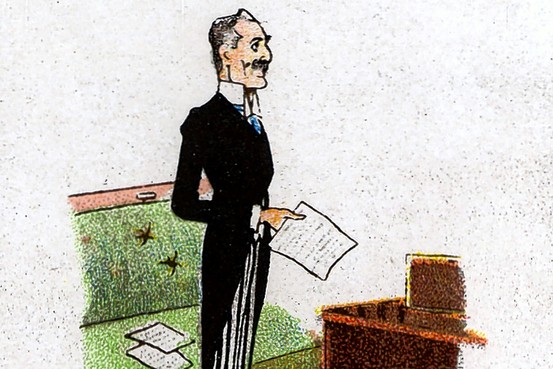
The Origins of The Second World War is of course one of the great historical debates of modern times. To be honest it is not really a topic that sets me on fire. I have however included this link from the Wall Street Journal as it contrasts five very different books from five very different historians. They all approach the topic from different directions. For us, it is a good reminder, that the conclusions that a historian draws will often depend upon their starting point.

Perhaps most noteworthy here is the reference to “The Origins of The Second War” by A.J.P. Taylor. This is a massively controversial revisionist text in which Taylor presents Hitler in 1939 not as the bringer of the Holocaust, but as another German stateman with a vague idea to rip up the Treaty of Versailles. For Taylor, the origins of the Second World War should not be seen as a moral question. Hitler was as an opportunist who blundered into war without a master plan. It is perhaps the most controversial history book of the Twentieth Century, but as Taylor’s pupil, Kathleen Burke states, “it broke the log jam of history”.

You might like to wtach the youtube clip below of Taylor discussing the book with his great rival, Hugh Trevor Roper.

Posted in historians, history in the news | Comments Off on The Origins of The Second World War – different approaches to the same topic

Update – Calleva Atrebatum – City of the Dead

You may remember from an earlier post Calleva Atrebatum – City of the Dead how recent work on the Silchester site is changing our understanding of the Roman and Iron Age period. In particular, some archaeologists now believe that there was Iron Age / Celtic town on the site. This would be very significant, and it is thought to have developed in the period between Caesar’s invasions of Britain and the full conquest.

This theory is excellently explained in third episode of  A History of Ancient Britain with Neil Oliver. The link takes you to the iplayer page. Really interesting stuff happening on our doorstep.

Posted in Places to go, Uncategorized | Comments Off on Update – Calleva Atrebatum – City of the Dead

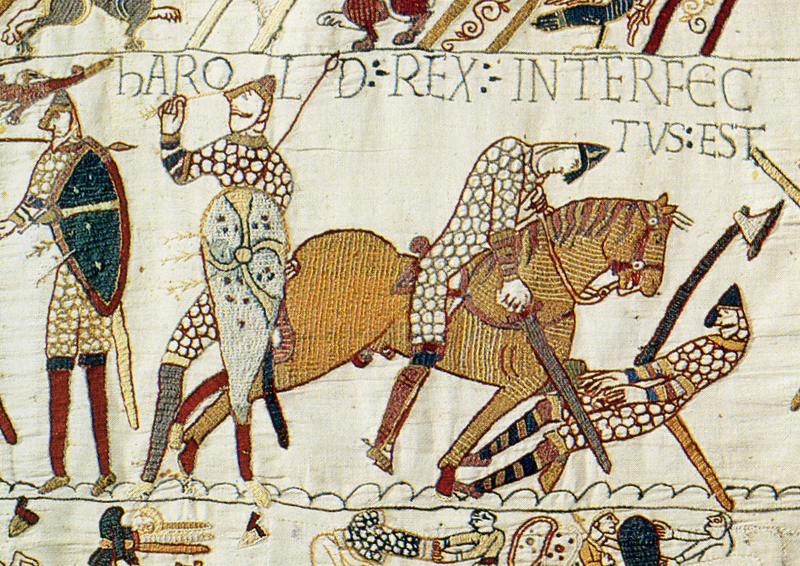
Debate over the location of the site of the Battle of Hastings

In recent years there has been considerable historical discussion about the exact location of Bosworth field. It now seems that there is similar uncertainty about the location of the Battle of Hastings. This report from the BBC explains the uncertainty, and asks if it matters.

There is a link here to the earlier report on the Black Death. It is tempting to see the History of the Middle Ages as done (and dull ?). Nothing could be further from the truth. For me the very term is unhelpful. It is a huge 400 year period, which should not be generalised. Moreover, our understanding of it is still evolving.

Posted in history in the news | 1 Comment

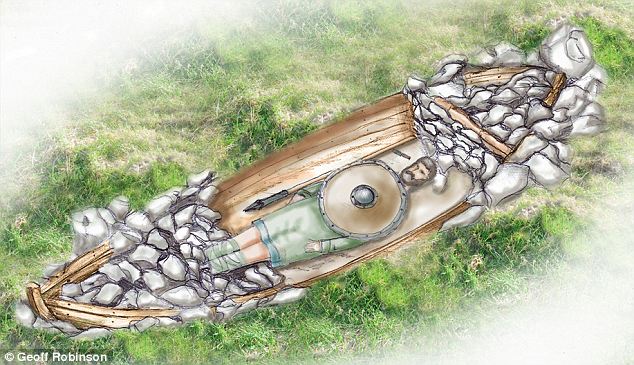
First fully intact Viking boat burial site uncovered

An excellent BBC news report here on the he UK mainland’s first fully intact Viking boat burial site. It has been uncovered at  Ardnamurchan, is thought to be more than 1,000 years old.  Artefacts buried alongside the Viking in his boat suggest he was a high-ranking warrior. Archaeologist Dr Hannah Cobb said the “artefacts and preservation make this one of the most important Norse graves ever excavated in Britain”.

There are some excellent close up images of the finds in the Daily Mail report here .

Posted in history in the news | Comments Off on First fully intact Viking boat burial site uncovered

A bit of balance

I was looking at the posts about history in the news that Mr Kydd and I have been posting and noticed that I tend to post about stories in the Guardian newspaper (which marks me out as an old lefty).

So, I thought it was time for a little balance on this blog.  For several years I’ve been reading a great blog that comes from the opposite end of the political spectrum from my own.  It is often very interesting, always very well written and sometimes politically infuriating. In short it is a great read and I’d be letting you down if I didn’t introduce you to the ‘Conservative History Journal‘.

Posted in history in the news, Site News | Comments Off on A bit of balance

The ‘Land Bridge’ theory bites the dust

If you have been at Little Heath School since Year 7, of if you were at another school that taught about Native American societies you might recall being told that the first humans in the Americas traveled as a hunter gatherer across a land bridge from Asia that connected with Alaska about 13,000 years ago.

It looks now as if there were humans in the Americas long before – as set out in this news report.

This is another really interesting example of how knowledge is sometimes temporary – we have to be prepared to question what we think we already know about the world in general, and our past in particular.


Posted in history in the news, Site News | Comments Off on The ‘Land Bridge’ theory bites the dust

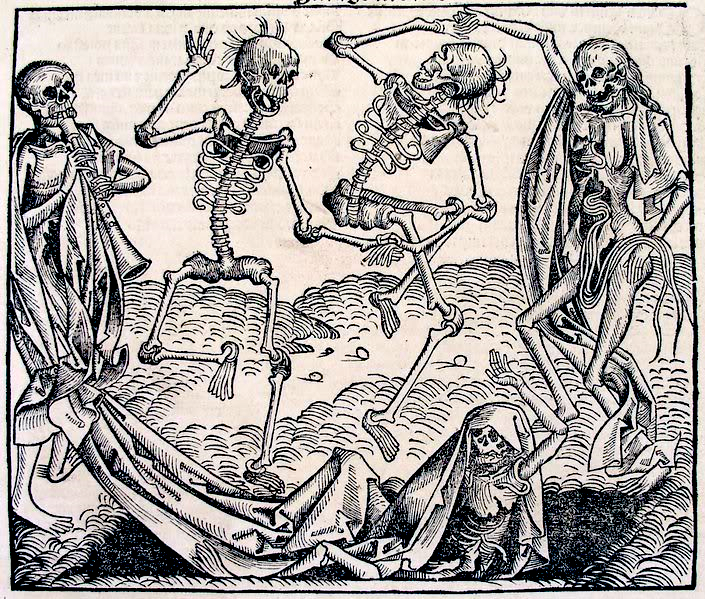
Black death DNA unravelled

In recent years there has been considerable speculation about the Black Death. In particular, some historians have argued that it was not actually Bubonic plague at all. A good introduction to this can be found in the Scott / Duncan book The Return of the Black Death . Other theories have even suggested that it might have been an early form of HIV. In this context, this article from today’s Telegraph shows again the growing importance of scientific methodology to the study of History.

If only I had paid more attention in Biology…

Mr Kydd.

Posted in history in the news | Comments Off on Black death DNA unravelled

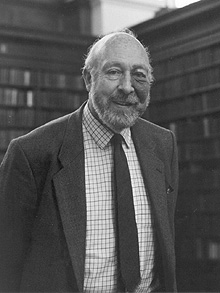
Obituary – Patrick Collinson

There are many things I liked about Patrick Collinson.  I always viewed him as a proper historian who was greatly underestimated, not least becasue of his association with Sir John Neale. He did in fact have an original mind, and for me an attractive writing style. If you want a well organised orthodox view of Elizabethan parliaments, you could do a lot worse than read his 1967 text “The Elizabethan Puritan Movement.” You don’t have to agree with it to appreciate it.  There is an appropriate obituary from the Daily Telegraph here .

Posted in history in the news | Comments Off on Obituary – Patrick Collinson