We are all doomed…

Well perhaps.

I found my A Level Economics rather too demanding to make an informed comment. Some, like William Keegan in The Observer clearly think that we are heading for very choppy waters. He argues that it is all “getting serious”, continuing that ” The British economy is on the verge of an economic and social catastrophe. So is our principal export market, the eurozone. And the mighty United States, whose treasury secretary has commendably urged Europe to pull itself together, is up against the unfortunate reality that the Republicans are doing their level best to pull their own country apart.”

It is natural for us historians to look over our shoulders at the Great Depression here. What parallels can and should be drawn ? Or is this just lazy and easy History ? Have a look at this BBC Audio slideshow and see what you think.

Posted in history in the news | Comments Off on We are all doomed…

David Starkey and the role of the historian. Part Two.

In August I posted some reactions to Starkey’s comments about the riots on Newsnight. I asked then  why when major events happen do we turn to historians to explain them. This article from the Daily Telegraph really asks the same question. The difference is that it is asked by historians themselves, who believed that Starkey  lacked “understanding of the history of ordinary life in modern Britain” to do the job properly. The full letter can be found here – read it for yourself.

Whatever you think about all this, two things appear to be true.

1. Historians like knocking lumps out of each other.

2. David Starkey comments about race and riots are not going to be forgotten in a hurry.


Posted in history in the news | 2 Comments

10 years on: is the world a safer place after 9/11 ?

As the tenth anniversary of 9/11 approaches it is natural that academics are starting to feel that it is appropriate to reflect on the significance of the event. This is not of course to deny that it is first and foremost a tragedy that impacted on so many innocent people. However, these two posts from the University of Reading try analyse the impact of the event. What is noteworthy again is how academic fields overlap.

Finally, as we are looking at the University, you might like to be aware of this list of public lectures that they have put on offer. A visit to one could perhaps be combined with a pre-arranged EPQ visit to their library.

Mr Kydd.

Posted in Site News | 6 Comments

New stonehenge article gives a good insight into how important science is to the study of prehistory.

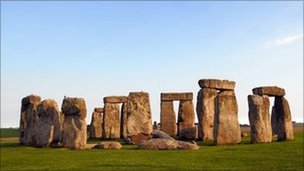
This BBC article explains how archaeologists  have worked out the location of the tomb for the original builders of Stonehenge (in Wales).

Professor Wainwright  comments “It can be compared directly with the first Stonehenge, so for the first time we have a direct link between Carn Menyn – where the bluestones came from – and Stonehenge, in the form of this ceremonial monument.”

It is perhaps most noteworthy to us in that it reflects the growth over recent yeasr in the use of  use scientific method in the study of pre-History.

Mr Kydd.

Posted in history in the news | Comments Off on New stonehenge article gives a good insight into how important science is to the study of prehistory.

Reading pins down new online history

It is always good when something orginal happens close to home so, it this report from the Reading Post is really exciting. As the report states  “Reading will become the first place in the world to create an online history of itself as part of a remarkable new project… members of the public are being urged to take part by uploading their own contributions.The idea is to use Google Streetview,  to allow members of the public to look at current street scenes overlaid with historical pictures and videos.

It is hoped that “over the next few months, thousands of people from across the town will be adding photos, stories and recollections to the archive and all of this will be brought to life at an exhibition at Reading Museum from September to January and on www.historypin.com/reading.” It would be really great if some of you could get involved with this.

Mr Kydd.

Posted in history in the news | Comments Off on Reading pins down new online history

“Who controls the past, controls the future: who controls the present controls the past” – George Orwell 1984

You often get more informed and reflective comment in the Sunday newspapers. So it seems here in this week’s Observer. Historian and MP for Stoke Central, Tristram Hunt, writes about falling numbers of GCSE and A Level History students. For me he makes a particularly interesting / controvertial point when he argues that the decline in steepest in what he calls  “our most deprived communities“. He cites the example that “in Knowsley, near Liverpool, just 16.8% of pupils were entered for history, compared with 45.4% in Richmond upon Thames“. It is valid to put this point next to Mr Podesta’s comment about statistics on my earlier post on this topic.

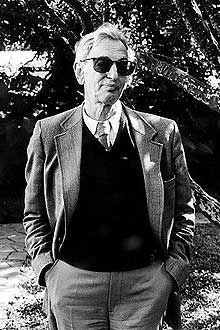
Whatever you think of that, the article is useful to us as A Level historians, because Hunt uses arguments from the Marxist historian, Eric Hobsbawn (shown). He cites Hobsbawn’s view that, “the destruction of the past or, rather, of the social mechanisms that link one…to that of earlier generations, is one of the most characteristic and eerie phenomena of the late 20th century. Most young men and women…lack any…relation to the…past.” 

I don’t know what Hunt thinks about Hobsbawn’s ideas on duel revolution and liberal captialism -personally they are not really for me. The point is that a confident historian can cite and interact with evidence that might come from a source that they have real problems with if it is helpful, as here.

By the way – this is a Band One skill on your forthcoming Russian dicatorships paper.

Posted in history in the news | Comments Off on “Who controls the past, controls the future: who controls the present controls the past” – George Orwell 1984

History and computers?

Eric Schmidt (Google chairman), has recently condemned the UK education system.  He claims that we tend to separate students into ‘science’ and ‘humanities’ categories too much.  According to Schmidt, instead we should be encouraging more to become ‘polymaths’ – people who are good across the science / humanities spectrum (not people who can easily add or subtract parrots).

Anyway, in the spirit of Schmidt’s call for more cross-over between the sciences and the humanities, here’s an interesting piece (yet again from the lefty Guardian) about the first business computers – developed and used in conjunction with a chain of British tea-shops in the 1950s.  It combines three loves of my life, history, computers and a nice cup of tea. What more could you ask for?

Posted in history in the news | Comments Off on History and computers?

History uptake continues to decline…

At this time every year there is a conversation in the media about grade inflation and “hard” V “soft” subjects. In truth it is a more complex topic than some would have us believe. However one fact shines through – the number of students undertaking GCSE History continues to decline. There is a very good account of the reality that 70% of students drop the subject at fourteen in England from the Channel Four News website here (for the record about 70% of you opt to study the subject at Little Heath).

What makes this version of the story more interesting to me is that they bother to interview Paula Kitching from the Historical Association. She focuses on the subject’s worth rather than it’s difficultly.  She argues “History widens the mind and for that reason alone it is valuable. It gives young people a sense of why a country is what it is, how a society is what it is and helps them interpret the world we have today.”  One could argue that this its strongest defence, and perhaps makes the subject more important now than ever. Perhaps also it is just another version of my context point (see the earlier post on historians and the riots).

Mr Kydd.

Posted in history in the news | 2 Comments

Informed decision please Year Thirteen

First off congratulations on a cracking set of AS results. They are a tribute to all your hard work and hours of revision.

It is course the nature of examinations that some of you will want to target a re-sit in the January examination season. Your class teacher will give you a sheet with your unit break downs and the number of marks that you are away from the next grade boundary. There will be revision support closer to that date, but initially we would strongly recommend that if you are looking to redo a paper, then you should order your script (£9.50) from the examinations office. An appropriate member of the department will of course be happy to go through this with you.

Posted in Uncategorized | Comments Off on Informed decision please Year Thirteen

Is everything I ever taught you wrong ?

Those of you that had the misfortune to be taught by me in Year Seven will of course remember that it was the Romans who brought urban living to Britain. Well it seems, perhaps not for the first time, I might be wrong. The University of Reading’s Silchester dig (see earlier posts) have found evidence of an Iron Age town built on a grid and signs inhabitants had access to imported wine and olive oil. In the Daily Telegraph article from the 18th August, Professor Fulford comments “The people of Iron Age Silchester appear to have adopted an urbanised Roman way of living. They did this all before the Romans had arrived. It is remarkable to find this evidence of an Iron Age layout before the arrival of the Romans and the development of a planned Roman town. It would be hard to see a significant difference between the lifestyles of the inhabitants of the Iron Age town and its successor in the 1st century AD.”

There is a longer BBC article here, which also suggests that a layer of burned soil might mean that Calleva Atrebatum was the fourth city burnt by Queen Boudicca. It also links to the Digging for Britain Television programme page. There will be a programme on the Iron Age town in September.

Posted in history in the news, Uncategorized | Comments Off on Is everything I ever taught you wrong ?