Historians and the riots.

All of us will of course have been aware of the awful rioting in early August, and many of us will have heard (about) David Starkey’s comments on Newsnight. If not, or if you want to hear the discussion Verbatim then this BBC news report allows you to do that.

I am posting this not to make a judgement Starkey (you can do that for yourselves), but rather to reflect on why we turn to historians at all when such major events happen. Why should we seek the views of a man who is after all an Early Modern specialist any more than a poet, educationalist or other professional ? What does it say about the role of the historian ? It is noteworthy that Starkey is not the only historian to have had an opinion. Peter Ackroyd was interviewed in the The Independent today. He suggests “rioting has always been a London tradition. It has been since the early Middle Ages. There’s hardly a spate of years that goes by without violent rioting of one kind or another. They happen so frequently that they are almost part of London’s texture. The difference is that in the past the violence was more ferocious, and the penalties were more ferocious – in most cases, death.”

Perhaps this goes someway to answering my question. Do we look to historians for context to events that shock or surprise us ?

Posted in historians, history in the news | 2 Comments

Ian Kershaw on writing history about Hitler

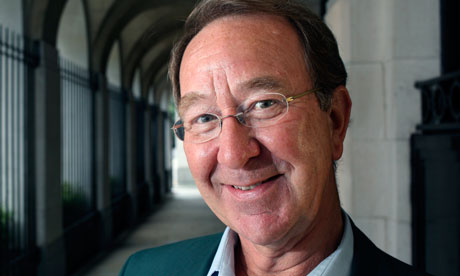
photo of Ian KershawIn this interview in in the saturday Guardian, there’s a fascinating insight into what drives historians in their choices of research, in the process of writing history books, and in the way that different schools of historians views are often used together by those writing later.

Especially useful for year 13s and those writing their coursework this year – and if you’re interested in why Hitler seems to pre-occupy many of those making history today.

Posted in historians, history in the news | Comments Off on Ian Kershaw on writing history about Hitler

“Earliest” Map of Britain made available as an interactive website

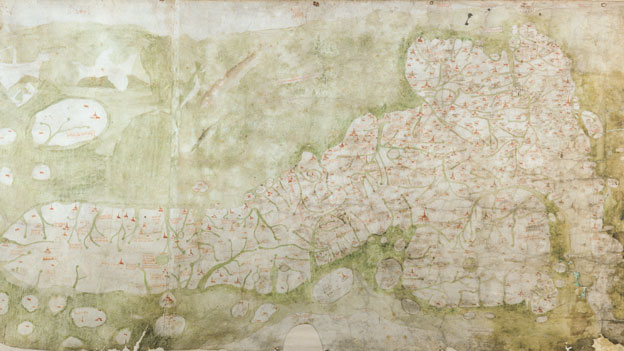
This is the earliest surviving map of Britain – the Gough Map. It dates from the 1370s, and was revised in the early Fourteenth Century. The BBc article linked below comments, “drawn on two pieces of sheepskin, the 115 x 56cm (45 x 22 in) artefact depicts Great Britain on its side, before the convention of maps pointing north.” He continues, “It is the prototype of modern English cartography. It shows real geography as opposed to theology which earlier maps tended to show…the additional beauty is you’ve got at least 600 place names there so it’s a wealth of information from the late Middle Ages and it’s relatively accurate.”

BBC Report

Interactive Gough Map Homepage

If you would like to see how contrasting  a series of maps can help historians, then watch / listen to this excellent audio slideshow about the African archives held by the Royal Geographical Society.

A map history of Africa

Posted in Uncategorized | Comments Off on “Earliest” Map of Britain made available as an interactive website

Beyond the Blitz: 70 stories for 70 years

A bit of oral history for you this time.

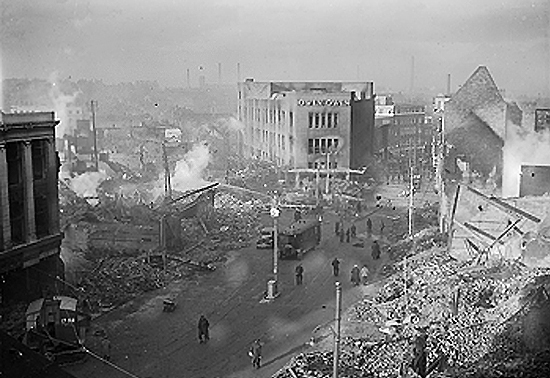
To mark the seventieth anniversary of the Blitz of Coventry the BBC recorded 70 stories from 70 survivors. You can access them through the interactive website on the link below. It is the type of thing that the BBC do so well, and some of them are very very moving.

Beyond the Blitz: 70 stories for 70 years BBC Special Report

Posted in Uncategorized | Comments Off on Beyond the Blitz: 70 stories for 70 years

Why Study History ?

The link below is very well written. It is from the History department of Hanover College, Indiana. It is a brief article on some of the reasons for studying undergraduate History. At the bottom of the page are links to similar articles. A good stimulus perhaps before starting the first draft of your personal statment.

“History is unique among the liberal arts in its emphasis on … context. Historians insist that the past must be understood on its own terms…as part of a web of interrelated institutions, values, and beliefs that define a particular culture and era. Among the liberal arts, history is the discipline most concerned with understanding change.”

Why Study History – Frank Luttmer

Posted in Uncategorized | Comments Off on Why Study History ?

Computer recreation suggest that the magic bullet could work…

Something a bit different this time. If you cast your minds back to the enquiry work that we did on the Kennedy assassination in Year Nine then you might remember the problem of the magic bullet (see the attached image).

A recent computer recreation shows that perhaps it was not so magic (see the link below). What does this mean ?

  • Well of course it does not mean that there was no conspiracy.
  • Equally however it reflects how careful we need to be when considering revisions on Orthodox ideas. The most exciting answer is not always the most accurate.

Magic bullet page


Posted in Site News | Comments Off on Computer recreation suggest that the magic bullet could work…

The hero with the shovel…

Something a bit more recent.

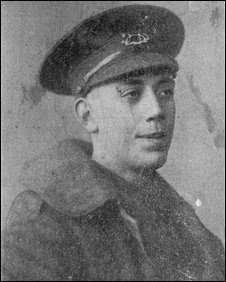
The young man shown in the thumbnail on the left is Frederick Potts. He holds the very special distinction of being the only person in the history of Reading to be awarded the Victoria Cross following his actions at Gallipoli in August 1915. He was 22 at the time.

He is known as the hero with the shovel because of he used this to transport a wounded man, Arthur Andrews, at the end of two days of hell. His actions risked his own life, and saved Andrews. After the war,  Potts returned to Edgehill Road and became a master taylor. The attached links tell a very special story if you want to know more…

 Audio Slideshow – Part One

Audio Slideshow – Part Two

What Fred Potts means to me

The Potts VC memorial site

Posted in Uncategorized | Comments Off on The hero with the shovel…

The Staffordshire Hoard

I promise that this will not become an archaeology site. However the past couple of years have seen some very special finds in Britain. The zoomorphic mount shown left is part of the famed Staffordshire hoard, but the links below show some other extraordinary collections discovered in the past year.


 Staffordshire Hoard (Anglo Saxon) website

The importance of the Staffordshire Hoard

How the Staffordshire Hoard was found

Viking Hoard found

Huge Roman coin hoard found in Colchester


Posted in Uncategorized | Comments Off on The Staffordshire Hoard

City of the Dead: Calleva Atrebatum

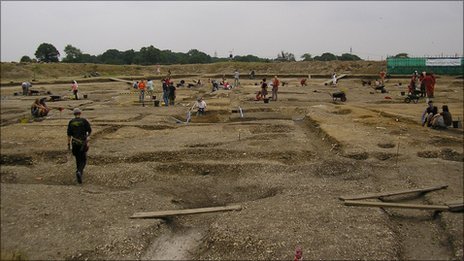
A couple of really excellent articles about Calleva Atrebatum – Silchester to you and me. The first is a brief history of the town from the BBC, and the second is a Guardian article about an extraordinary find from last summer. If this interests you, then you might like to consider volunteering for this Summer’s dig.


BBC – History of Calleva Atrebatum

Guardian article

Online Application to join the 2011 Summer dig


Posted in Uncategorized | Comments Off on City of the Dead: Calleva Atrebatum

Be careful with the historians that you read…

It is hard to know how to react to this news article (orginally posted on the old site). On first consideration any historian who posts secret Amazon reviews of his rivals’ books as having “no insights to make it worth the bother of ploughing through its dreadful prose” whilst relflecting that his own work as “rich and deeply moving history, which leaves the reader awed, humbled, yet uplifted” does not deserve much sympathy. However, the real point for us here is that historians have always clashed and not shown each other enough respect.

Have a look at the Guardian article and Robert Service’s view (he is the victim of the false reviews here). Then have a look at the youtube clip of A.J.P.Taylor and Hugh Trevor Roper discussing Taylor’s controversial “Origins of The Second World War”.

Guardian Article

Robert Service’s View

A last word.

No schadenfreude please – Figes is still an outstanding historian, who is well worth reading.  His body of work speaks for itself, and in particular I would say that few things I have read match “A People’s Tragedy” in conveying the scale and brutality of Russian History. A copy is in the school library…

Mr Kydd.


Posted in historians, Uncategorized | Comments Off on Be careful with the historians that you read…