Many thanks to you and your parents for coming tonight – we very much hope it was helpful.
As promised, please find below the PowerPoint we used below.
Mr Kydd.
Many thanks to you and your parents for coming tonight – we very much hope it was helpful.
As promised, please find below the PowerPoint we used below.
Mr Kydd.
Year Nine,
The following letter and PowerPoint will be available on the school Gateway in the near future. However in case you have problems with it, I have added them here as well.
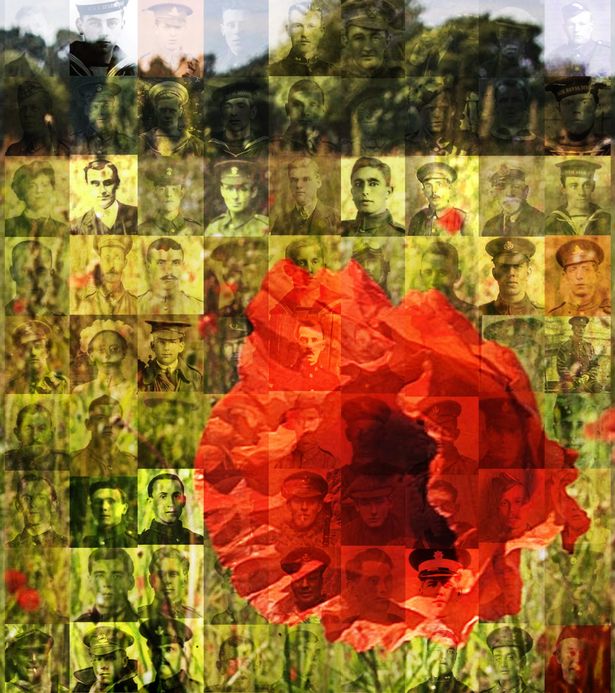
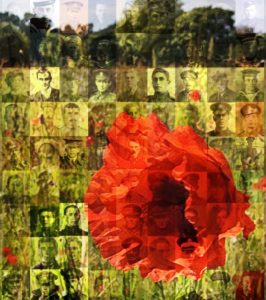
As you may be aware, Year Nine students are studying the First World World War in the run up to the centenary of the Armistice in November. To mark such a significant anniversary, we are going to ask each student to research one person involved in the war. Typically this will be a soldier who died, however we are open-minded to other suggestions. This work will take place in three history lessons from Monday 8th October, and the school has paid for a license to the https://www.ancestry.co.uk/ website. Mrs Keeler in the LRC has a background in genealogy, and she will help the students develop their research skills as part of this project. The department intends to focus upon the names found the Ascot War Memorial (https://www.warmemorialsonline.org.uk/memorial/147923/).
I am writing to you however, in case you have a family member involved in the First World War, who your son or daughter would like to research instead. If so, they will need their full name, and any family or military information that you have about them. In particular, an electronic photograph would be very helpful. You may like to look at the attached PowerPoint presentation that we will be using with the students. In it, I model how I researched my relative, who died at the Battle of the Somme. Could I please ask however that no family records are brought into school for obvious reasons. In this digital age, scanned documents are ideal.
I hope very much that your son / daughter enjoys these lessons, and that it helps them to make sense of the forthcoming anniversary. Please contact either me or your child’s history teacher if you have any further questions.
Yours sincerely,
Alan Kydd.
Head of History.
If you click here you will get the In Our Time website. Again a great chance to listen to historians debate.
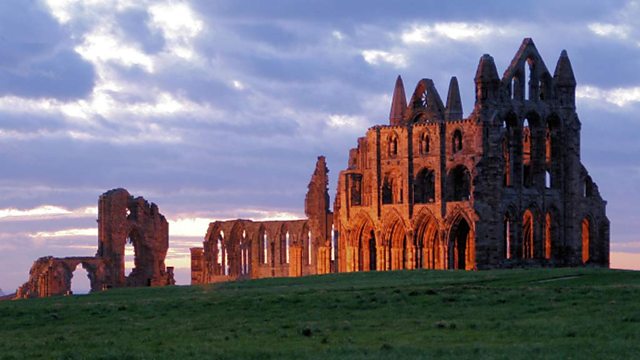
In this edition Melvyn Bragg and guests discuss the 7th century saint, Hilda, or Hild as she would have been known then, wielded great religious and political influence in a volatile era. The monasteries she led in the north of England were known for their literacy and learning and produced great future leaders, including 5 bishops. The remains of a later abbey still stand in Whitby on the site of the powerful monastery she headed there. We gain most of our knowledge of Hilda’s life from The Venerable Bede who wrote that she was 66 years in the world, living 33 years in the secular life and 33 dedicated to God. She was baptised alongside the king of Northumbria and with her royal connections, she was a formidable character. Bede writes: “Her prudence was so great that not only indifferent persons but even kings and princes asked and received her advice”. Hild and her Abbey at Whitby hosted the Synod which decided when Easter would be celebrated, following a dispute between different traditions. Her achievements are all the more impressive when we consider that Christianity was still in its infancy in Northumbria.
With John Blair, Fellow in History at The Queen’s College, Oxford; Rosemary Cramp, Emeritus Professor in Archaeology at Durham University; Sarah Foot, Professor of Early Medieval History at Sheffield University.
Mr Kydd.
If you click here you can listen to Radio 4’s In Our Time. As ever, it is a great opportunity to listen to historian debate.
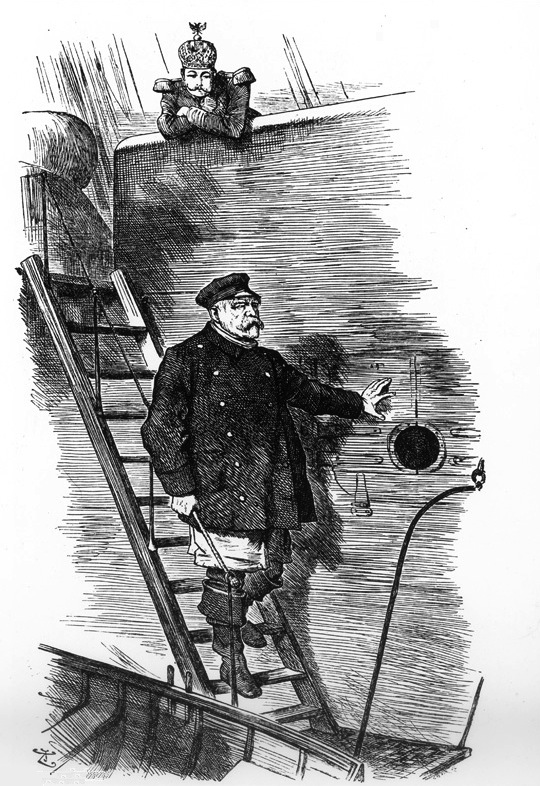
Melvyn Bragg and guests discuss the original Iron Chancellor, Otto Von Bismarck. One of Europe’s leading statesmen in the 19th Century he is credited with unifying Germany under the military might of his home state of Prussia. An enthusiastic expansionist, Bismarck undertook a war against Denmark that has become a by-word for incomprehensible conflict. The British Prime Minister, Lord Palmerston, said: “The Schleswig-Holstein question is so complicated, only three men in Europe have ever understood it. One was Prince Albert, who is dead. The second was a German professor who became mad. I am the third and I have forgotten all about it.”After vanquishing Austria and France, Bismark led the new industrialising Germany, managing to remain in power for a further two decades. Bismarck said: “The art of statesmanship is to steer a course on the stream of time” and he founded one of Europe’s first welfare states but he was also known for his ruthless tactics, ignoring democratic institutions, dabbling in dirty politics, leaking to the press and bribing journalists.
With Richard J Evans, Professor of Modern History at the University of Cambridge; Christopher Clark, Reader in Modern European History at the University of Cambridge; and Katharine Lerman, Senior Lecturer in Modern European History at London Metropolitan University.
Mr Kydd.
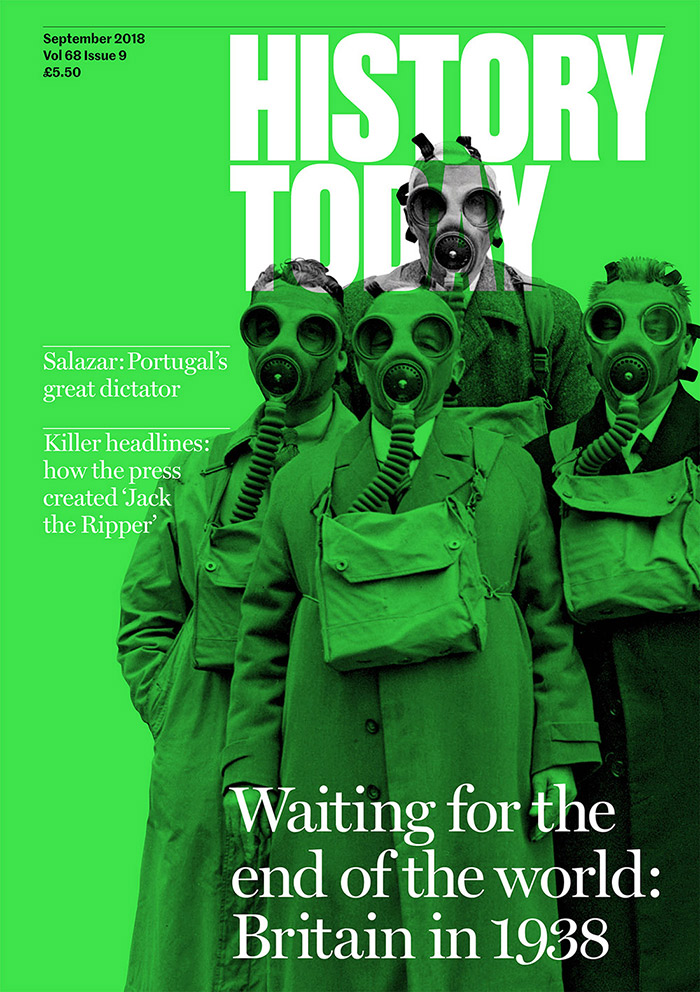
Can the study of the past really help us to understand the present? Click here for an article by Robert Crawford in September’s edition of History Today.
In An Autobiography, published in 1939, R.G. Collingwood offered an arresting statement about the kind of insight possessed by the trained historian. The philosopher of history likened the difference between those who knew and understood history and those who did not to that between ‘the trained woodsman’ and ‘the ignorant traveller’ in a forest. While the latter marches along unaware of their surroundings, thinking ‘Nothing here but trees and grass’, the woodsman sees what lurks ahead. ‘Look’, he will say, ‘there is a tiger in that grass.’
What Collingwood meant was that, through their familiarity with people, places and ideas, historians are often equipped to see how a situation might turn out – or at least identify the key considerations that determine matters. Collingwood’s musings implied an expansive vision of the role historians might play in society. Their grasp of human behaviour, long-term economic or cultural processes and the complexities of the socio-political order of a given region of the world meant that they could be more than just a specialist in the past. By being able to spot the tiger in the grass, historians might profitably advise on contemporary and future challenges as well….
Discuss…
Mr Kydd.
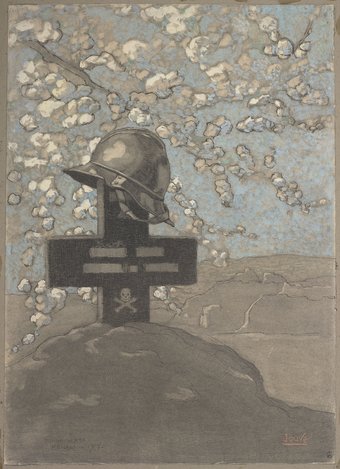
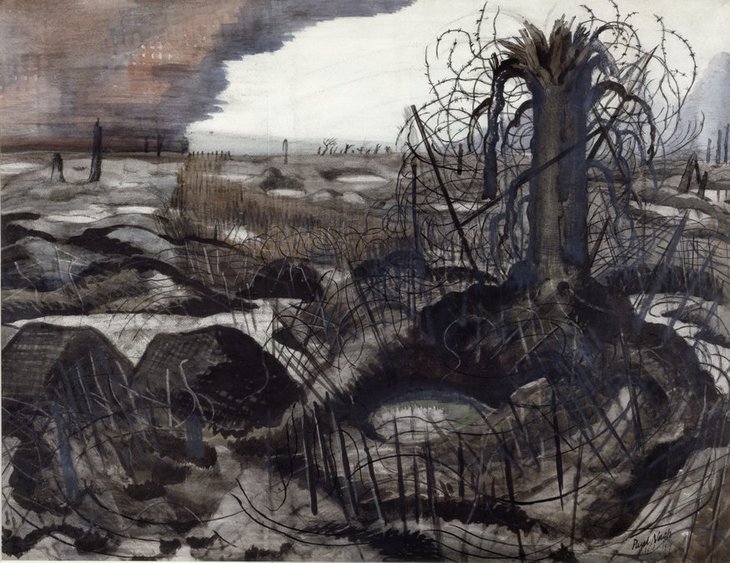
If you click here, you will get to an an introduction article on Aftermath: Art in the Wake of World War One at Tate Britain until 23rd September 2018. It is excellent, and considers some of the ways in which artists dealt with and reflected on the horrific consequences of war in the 1920s.
“A landscape that was once green in the foreground has
been splintered so it’s just a blackened husk, a washed out trench looks apocalyptic and only a lone upturned helmet signifies there was ever any life here. These paintings don’t contain any bodies or even a drop of blood, yet they convey the same message. War is horrific. War is futile. War is hell. Abandon all hope, ye who enter here.”
Reviews.
Mr Kydd.
These are just excellent – enjoy…
Mr Kydd.
Madeline Albright was the Secretary of State in the Clinton White House (1997-2001). Born in then-Czechoslovakia, her family fled Hitler and the Nazis in 1938. Initially they came to Britain. Her latest book – Fascism – a warning is a personal and urgent examination of Fascism in the twentieth century and how its legacy shapes today’s world.
Is Trump a Fascist ?
“A Fascist, observes Madeleine Albright, ‘is someone who claims to speak for a whole nation or group, is utterly unconcerned with the rights of others, and is willing to use violence and whatever other means are necessary to achieve the goals he or she might have.’
The twentieth century was defined by the clash between democracy and Fascism, a struggle that created uncertainty about the survival of human freedom and left millions of innocent people dead. Given the horrors of that experience, one might expect the world to reject the spiritual successors to Hitler and Mussolini should they arise in our era. In Fascism: A Warning, Madeleine Albright, draws on her own experiences as a child in war-torn Europe and her distinguished career as a diplomat to question that very assumption.
Fascism, as Albright shows, not only endured through the course of the twentieth century, but now presents a more virulent threat to international peace and justice than at any time since the end of World War II. The momentum toward democracy that swept the world when the Berlin Wall fell has gone into reverse. The United States, which has historically championed the free world, is led by a president who exacerbates popular divisions and heaps scorn on democratic institutions. In many countries, economic, technological and cultural factors are weakening the political centre and empowering the extremes of right and left. Contemporary leaders such as Vladimir Putin and Kim Jong-un are employing many of the same tactics used by Fascists in the 1920s and 30s.
Fascism: A Warning is a book for our times that is relevant to all times. Written with wisdom by someone who has not only studied history but helped to shape it, this call to arms teaches us the lessons we must understand and the questions we must answer if we are to save ourselves from repeating the tragic errors of the past.”
If you click here you will get to an Economist interview with her, and below is an interview that she did last month with Andrew Marr.
I have a copy if anyone one to borrow it.
Mr Kydd.
If you click here you will get to an article from the New York Times about Sophia Perovskaya – one of the five members of the People’s Will who assassinated Alexander II, and changed the direction of the Tsarist government.
“The first woman to be executed for a political crime in Russia, Perovskaya is credited with pushing the empire down the road to revolution and was later given the mantle of martyrdom. Tolstoy called her an “ideological Joan of Arc.”
Indeed, the execution of “Russia’s first female terrorist” matched the drama of the assassination. On April 15, she and her fellow militants were driven through the streets of St. Petersburg in tumbrels, dressed in black robes, with their hands tied behind them and black placards reading “Czaricide” hung around their necks. The cortege, under military escort, moved to the beat of drums through the throngs lining the streets.“
Mr Kydd.